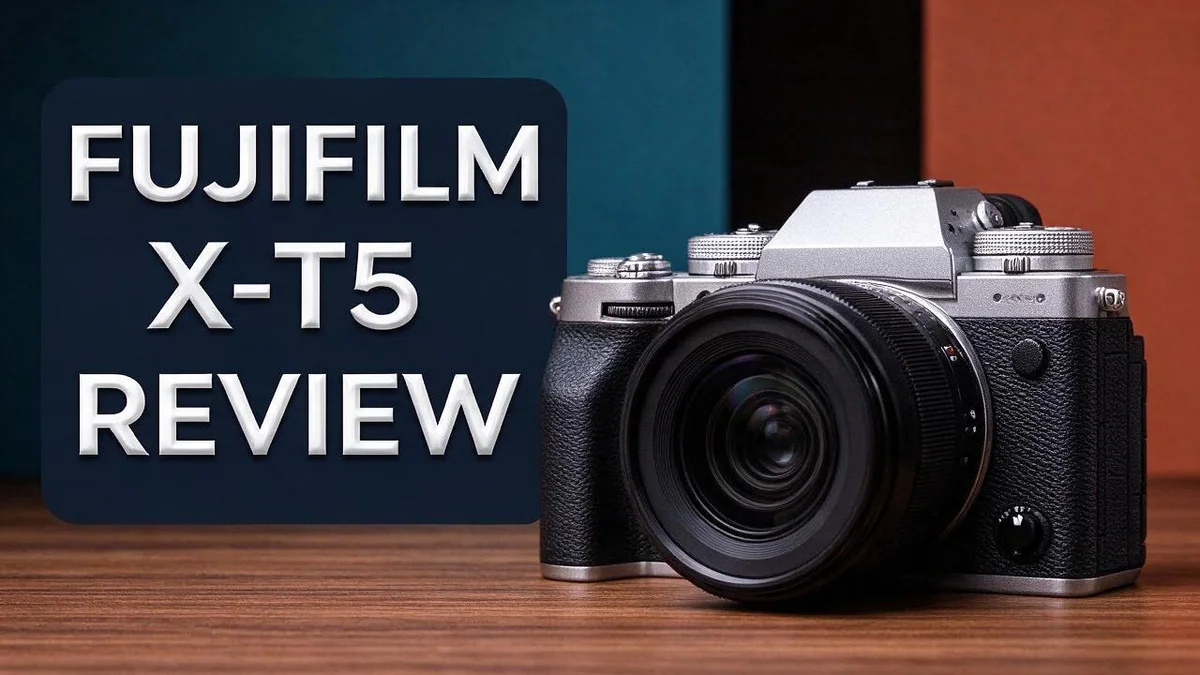
Fujifilm X-T5 Review: 40MP APS-C Camera Tested for Photos, Video and Travel
Are you looking for a camera that feels great in your hands? The Fujifilm X-T5 might be the one. It packs a 40.2MP sensor into a compact, weather sealed body.
Photographers love the fast and accurate autofocus. Subject detection locks onto people and moving subjects with ease. The electronic viewfinder is bright and clear, too.
Video shooters get solid results from this little camera. The articulating screen helps with tricky angles. Dials make quick changes simple and fun.
Ready to see if this camera fits your style? Let’s take a closer look at what it does well, who it suits best, and how it compares with its rivals.
In a Nutshell
-
Plenty of room to crop: The 40.2MP sensor captures large files. You can crop tight on a distant subject and still keep plenty of detail for prints and large displays.
-
Steady shots without a tripod: Seven stops of image stabilization across five axes help you shoot handheld in dim light. Your photos stay sharp even when your hands are not perfectly still.
-
Ready for rough weather: The fully weather sealed body handles dust, moisture, and cold conditions. You can take it on a hike or a rainy city walk without worrying too much.
-
Easy framing from any angle: The articulating screen tilts for low or high shots, and the electronic viewfinder shows your exposure before you press the shutter. Composing your shot feels natural and simple.
-
Backup storage built in: Two UHS II SDXC card slots let you record copies on the fly. This gives you a safety net for important shoots, events, and travel.
-
Stiff competition in its class: The Nikon Zf offers a retro look that many buyers compare directly. Fujifilm X S10 and X T30 II models give you smaller, lighter options if you want a simpler kit.
Image Quality and 40MP Resolution

Last update on 2026-10-28 / Affiliate links / Images from Amazon Product Advertising API Some of the links on this website are affiliate links, which means that at no additional cost to you, I earn a commission if you click through and make a purchase. I only recommend products and services that I believe will add value to my readers. Thank you for your support!
Image quality often decides whether a camera stays in your bag or gets used every day. The Fujifilm X-T5 produces pleasing color straight out of the camera. Many shooters enjoy this look before they touch any editing software.
Film simulation modes give the camera a personality that many rivals lack. You can choose a classic look for street shots, portraits, or landscapes. This saves time for people who prefer finished images from the start.
The sensor also handles light well in everyday scenes. Skin tones look smooth, and shadows keep useful detail. Bright skies still need careful exposure, so check your histogram often.
Resolution tells only part of the story. Sharp detail depends on the lens you attach. Fast primes and high quality zooms show the most benefit from 40MP.
Noise control deserves attention too. At higher ISO settings, grain appears but stays fine and pleasant. Many photographers feel comfortable shooting indoor events in dim light.
Raw files give you more room to adjust exposure and white balance. Recovering highlights or lifting shadows works well with this level of detail. You can fix many problems later without losing quality.
Large files need plenty of room on your computer. Each raw file takes up significant space, so plan for extra storage. Fast cards also keep the camera ready during long bursts.
Printing is another strong point for this camera. A 40MP image can produce large prints with fine detail. Gallery walls and posters look crisp at sizes that smaller sensors struggle to match.
Shutter speed matters more at full resolution. Even small shakes can soften fine textures in leaves or fabric. Try faster shutter speeds when you shoot detailed subjects handheld.
In short, the sensor rewards careful technique. Good lenses and steady hands bring out the best results from this camera.
Autofocus and Burst Shooting
Focus starts with the right area. The X-T5 lets you pick a single point, a zone, or a wide area. Small points suit posed portraits.
Wide areas work better when your subject moves across the frame. They give the camera more room to find the target.
Face and eye detection adds another layer of help. The camera locks onto a person’s eye and keeps tracking it.
Subject detection also recognizes animals, birds, and vehicles. You can focus on framing while the camera follows the action.
The focus lever makes changes quick. Your thumb moves the point while your eye stays in the viewfinder.
Burst shooting rewards good settings. Fifteen frames per second suits kids playing, cyclists passing by, or pets running in the yard.
The mechanical shutter keeps that speed without extra noise. It runs quietly, which helps during weddings or other calm events.
The electronic shutter pushes speed even higher. However, fast moving objects may show rolling shutter distortion. Check your files before you rely on it for sports.
Large 40MP files fill the buffer quickly. Short bursts often feel smoother than long rapid sequences. Fast cards also help the camera keep pace.
Shutter speed matters just as much as the camera. Try 1/1000 second or faster for moving subjects. Quick speeds freeze motion and keep details sharp.
Lighting changes how fast the camera refocuses. Dim rooms slow the process, so use a brighter lens or add light.
Lens choice affects autofocus too. Modern XF lenses use fast motors that keep up with action. Pairing the body with a capable lens gets the best results.
Practice makes these settings feel natural. Test your mode on a walk before a big shoot. You will learn which setup fits each scene.
Viewfinder, Screen and Dial Controls
Your eye sees the scene first. Looking through the viewfinder feels natural in bright sunlight. The view stays clear, so you can check the frame before pressing the shutter.
Compare the viewfinder with the screen. Some photographers prefer the rear display for street shots at waist height. The viewfinder works better when you need steady framing with the camera pressed to your face.
The rear screen handles touch tasks. You can tap the display to place the focus point. This helps when you shoot quickly from unusual angles.
Dials sit where your fingers expect them. The top plate holds separate dials for shutter speed, exposure compensation, and ISO. You can adjust key settings without digging through menus.
Some dials lock in place. Locks help keep your values safe while you carry the camera. Nothing shifts in your bag, so your settings stay ready for the next shot.
Firm dials prevent accidental changes. Solid controls make unwanted turns less likely during busy shoots. You spend more time framing and less time fixing mistakes.
Practice the layout at home. Spend a few minutes turning each dial while watching the screen. Muscle memory builds fast, and you soon adjust settings without looking down.
Screen brightness shapes your choices. Bright sunlight can wash out the rear display. Shade the screen with your hand or use the viewfinder instead.
Use the quick menu for everything else. Press the Q button to reach common options on one screen. Fewer taps mean more time spent on the subject.
Check the dial positions before each session. A quick glance prevents mistakes like shooting at the wrong ISO. Build a habit of reviewing values before you start.
Let the eye sensor save power. The sensor switches off the rear display when you raise the camera to your eye. This simple feature stretches battery life during long shoots.
Good habits make the controls feel natural. Practice, adjust, and review each setting. Keep the viewfinder and screen working together for better shots.
Top 3 Alternatives
Looking for other options? These three cameras are strong picks.
Sony a6700


Last update on 2026-10-28 / Affiliate links / Images from Amazon Product Advertising API Some of the links on this website are affiliate links, which means that at no additional cost to you, I earn a commission if you click through and make a purchase. I only recommend products and services that I believe will add value to my readers. Thank you for your support!
The Sony a6700 is a compact camera that fits well in a small bag. It offers fast autofocus that tracks people, animals, and vehicles. Its in-body stabilization helps keep handheld shots sharp. Video users will like the high frame rate options for smooth slow motion.
Canon EOS R7

Last update on 2026-10-28 / Affiliate links / Images from Amazon Product Advertising API Some of the links on this website are affiliate links, which means that at no additional cost to you, I earn a commission if you click through and make a purchase. I only recommend products and services that I believe will add value to my readers. Thank you for your support!
The Canon EOS R7 suits people who shoot action. It has a high-resolution sensor and quick burst shooting. The camera also keeps its focus well on moving subjects. Its body feels solid in the hand, and the controls sit in easy spots.
Nikon Z50 II

Last update on 2026-10-28 / Affiliate links / Images from Amazon Product Advertising API Some of the links on this website are affiliate links, which means that at no additional cost to you, I earn a commission if you click through and make a purchase. I only recommend products and services that I believe will add value to my readers. Thank you for your support!
The Nikon Z50 II is a light choice for everyday photography. It has a flip screen that helps with selfies and vlogging. Beginners often find its menus simple to learn. It also works well for travel because it stays easy to carry all day.
Each of these cameras gives you a good mix of image quality and easy use. Pick the one that matches your shooting style and your budget needs.
Stabilization, Video and Battery Life
Image stabilization helps you shoot sharp photos without a tripod. The camera uses built in stabilization to steady the sensor. This system works with many lenses you attach.
Handheld shots at slow speeds become much easier. You can often use a slower shutter speed and still keep details crisp. Night scenes and indoor events benefit most from this feature.
Stabilization also smooths small shakes while you film. Walking shots look calmer than you might expect. This matters for travel clips and everyday family moments.
Video quality stands out for a camera this size. The camera records 6.2K footage and smooth 4K clips at high frame rates. Colors look rich right out of the box.
Film simulation modes give your clips a classic look. You can choose a style that matches your mood before you hit record. Many creators enjoy this creative freedom.
Battery life is decent for a mirrorless body. Most shooters get through a full day with one battery. Carry a spare for long events, though.
Heavy video work drains power faster. Long recordings, bright screen use, and cold weather all shorten runtime. You can charge over USB C while you travel.
Smart habits stretch every charge. Turn off unused features and lower the screen brightness when you shoot outdoors. A small pouch of spare batteries keeps you ready all day.
Good planning makes a big difference on shoot days. Check your battery level before you leave home. Pack a fully charged spare in your bag.
Steady shots also mean fewer retakes. Fewer retakes mean less time with the screen on, and that helps the battery last longer.
Stabilization makes this camera a good fit for travel. Light weight and steady images let you explore without carrying extra gear. That balance feels great on long trips.
Connectivity, Storage and Build
The Fujifilm X-T5 offers two SDXC card slots. Both slots support fast UHS-II cards. Fast cards keep up with big 40MP files.
Use slot two as a backup. Every photo can save to both cards at once. Your images stay safe if one card fails.
Or let slot two handle overflow. When the first card fills, the camera switches over. You never stop shooting during a long wedding or trip.
USB-C handles data and charging. Connect the camera to a laptop for quick transfers. A fast cable makes large batches of files move smoothly.
The Micro HDMI port sends images to a larger screen. Clients or friends can review shots on a TV. Clear playback helps you check focus and framing fast.
Micro HDMI uses a smaller plug than standard HDMI. Pack the right cable before you travel.
The 2.5mm remote release port keeps your hands off the body. Long exposures and macro shots stay steadier. Many photographers use a cable release for night sky shots. Pair it with a sturdy tripod for best results.
Build quality feels confident in tough conditions. The body is fully weather sealed. You can shoot in dust, drizzle, or cold air with more peace of mind.
The body stays compact for everyday carry. Yet it still feels sturdy. Pair it with smaller lenses for balance.
Storage choices matter for long shoots. Buy cards with high write speeds. Format cards in the camera before each trip.
Keep a spare card in your bag. Label each card by date or event. This habit saves time and stress later.
Think about the cards you buy. Choose a brand you trust. Read speed ratings on the label before you buy.
Slot order matters too. Check which slot the camera uses first in the menu.
Small habits protect your photos. Check the card status before each shoot. Quick checks prevent missed moments.
Pros and Cons
Pros
– 40MP files give you plenty of room to crop.
– Subject detection AF tracks people and animals with ease.
– Autofocus feels fast, quiet, and accurate.
– The 15 fps mechanical shutter captures quick action.
– The compact body feels lighter than full frame models.
Cons
– The body suits smaller lenses best, so heavy glass feels unbalanced.
– Large 40MP files fill up storage fast.
– Shooters who want a deep grip may find the body small.
– The Nikon Zf offers a close rival for direct comparison.
Who Should Buy It
The Fujifilm X-T5 fits certain photographers best. Think about how you shoot, then decide if this camera matches your style and goals.
Travel photographers will likely enjoy it. Packing light matters on long trips. You can wander all day without feeling weighed down.
Manual shooters will feel at home here. The dials sit where your fingers expect them. Many people enjoy setting exposure by feel instead of digging through menus.
Street and documentary shooters also gain a lot. The understated look helps you blend into busy streets. People often act more naturally when they do not notice the camera.
Enthusiasts moving up from entry models may find a clear upgrade path. The image quality and handling feel like a real step forward. You gain more control without moving to a large system.
Portrait and product shooters should look closely at the color options. Film simulation styles give skin tones and products a pleasing finish straight out of camera. Less editing time means more time shooting.
Photo walkers and hobby explorers enjoy a camera that inspires them. Shooting feels like a pleasure rather than a chore. That feeling often makes you take more photos and grow faster.
Event shooters who need reliable backup may appreciate the layout. Settings stay easy to reach during fast moments. You spend less time searching and more time capturing.
Complete beginners should try the controls first. The menus and settings take time to learn. A simpler camera may feel easier at the start.
If you want a camera that feels fun to use every day, this model deserves a place on your list. Try it in a shop before you decide. Hands on time helps you know if it feels right.
Final Verdict
Our final verdict is clear. The Fujifilm X-T5 is a confident all round camera. It suits photographers who value control and sharp image detail.
The camera never feels like a compromise. Its files hold up well when you crop or print large. Its handling keeps your eyes on the scene instead of the menus.
Think about your lens kit before you buy. Lighter glass gives the best balance. Heavy zoom lenses can make the small body feel top heavy.
The grip is the main trade off to consider. Hands with large fingers may want an extra grip accessory. Try the camera in a store if you can.
Video users get a solid tool, not a flagship. The footage looks clean for online content and short projects. Serious filmmakers may want more advanced video features.
Battery life is steady for everyday shooting. Pack a spare battery for long trips or full event days. This keeps your shoots running without stress.
Think about how you like to learn. The dials make settings easy to change while you shoot. New shooters often build skills faster with a tactile camera like this.
Overall, this camera rewards patience and practice. It grows with your skills and keeps inspiring you over time. Smaller siblings in the lineup suit anyone who wants an even lighter kit.
Our advice is simple. Choose the X-T5 if you want image quality, handling, and room to grow. Skip it only if you need a deep grip or top tier video specs.
Your shooting style matters most in the end. Walk through a few real sessions before you commit. That practical test will show whether the layout fits your hands and habits.
In short, the X-T5 is a joy to own. It delivers strong results with a fun, tactile feel.
Frequently Asked Questions
Does the Fujifilm X-T5 have image stabilization?
Yes, it uses a 5 axis, 7 stop stabilizer built into the body. This helps you shoot sharp handheld photos in dim rooms. It also smooths your footage when you move around.
Can I connect the X-T5 to other devices?
Yes, it has a USB C port for transfers and charging. A Micro HDMI port sends images to a bigger screen. You can also trigger the shutter with a 2.5mm remote release.
Does the screen flip for selfies?
Yes, the articulating screen tilts and swings out. This helps when you film vlogs, travel selfies, or low angle clips. You can see the frame from awkward positions with ease.
Which Fujifilm model should I consider instead?
If you want a lighter, simpler body, look at the Fujifilm X-S10 or X-T30 II. These suit people who shoot less often or want to keep their gear small. The X-T5 fits those who want more resolution and deeper control.

Hi, my name is Lily you can say i am a gadget hunter at this point. Welcome to Gadget Gallery The Gallery of Gadget Reviews