
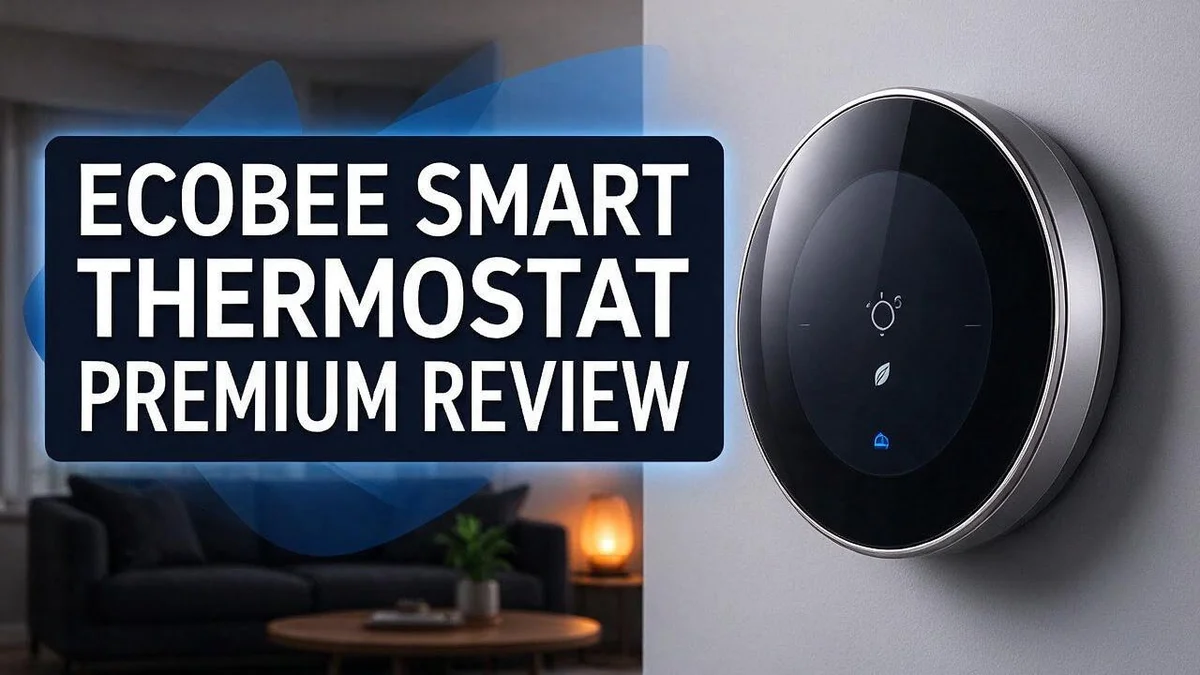
Ecobee Smart Thermostat Premium Review 2026: Worth the Price?
The Ecobee Smart Thermostat Premium stands out from the crowd. It controls both heating and cooling, and it works with most HVAC systems.
Think of it as more than a thermostat. It also plays music, answers voice commands, and acts as a security device. Its built in air quality monitor sends alerts and tips when your air needs attention.
Remote sensors come in the box. That means you can balance temperatures room by room. Testing by Dr. Dave Ellerby, Ph.D. found that it controls temperature well.
Fuller Alexa integration and a faster SmartSensor add real benefits. The eco+ suite also gives you detailed energy data and smart recommendations.
Keep reading to see if this model fits your home. We cover the features, the pros, and the tradeoffs.
In a Nutshell
• Heating and cooling made simple: The Ecobee Smart Thermostat Premium manages your home’s temperature with ease. It also doubles as a smart speaker and security device.
• Air quality insights: A built-in monitor tracks the air inside your home. You get alerts, helpful tips, and reminders when it is time to change your filters.
• Energy savings with the eco+ suite: This suite gives you smart recommendations. It helps you save energy while every room stays comfortable. Many households find these tips easy to follow.
• Better sound and voice control: Music sounds richer through the upgraded speaker. The glass screen and quad core processor make daily use feel smooth and quick.
• Wide HVAC compatibility: Most heating and cooling systems work with this model, which makes setup easier. Its furnace compatibility also stands out for homeowners with older equipment.
• Clearer energy reports: You get more detailed energy data than before. Use these insights to spot patterns and adjust your schedule each week.
Temperature Control Performance

Last update on 2026-10-13 / Affiliate links / Images from Amazon Product Advertising API Some of the links on this website are affiliate links, which means that at no additional cost to you, I earn a commission if you click through and make a purchase. I only recommend products and services that I believe will add value to my readers. Thank you for your support!
Temperature control is the heart of any thermostat. This section looks at how well the Ecobee Smart Thermostat Premium keeps your rooms comfortable day after day.
Independent testing gave this model a strong result. Dr. Dave Ellerby, Ph.D., found that it controls temperature well. That matters because a thermostat only earns its place when it holds steady readings.
Steady temperatures protect comfort. Rooms that swing from hot to cold feel uneasy. A good thermostat reacts quickly and keeps the air close to your chosen setting. This model aims to do exactly that.
Think about a typical afternoon. Sunlight warms one side of the house while the north rooms stay cool.
A thermostat that reads the air at one spot may miss these differences. Sensors placed in other rooms give the system a fuller picture. The result is more even warmth across the home.
Heating and cooling respond to real conditions. The system watches changes in the house and adjusts output to match.
Instead of running hard and then shutting off, it aims for smooth operation. Smooth operation keeps comfort steady and reduces sharp temperature jumps.
Your system type plays a role too. Equipment that cycles often can feel less even.
This thermostat helps by working with your existing furnace or air conditioner in a balanced way. Good control depends on both the unit and the equipment it runs.
Quick checks help you get the best results. Place the main unit away from heat sources like lamps or direct sunlight.
Keep vents clear of furniture. Then review your daily schedule so the system heats or cools only when needed.
Overall, this model handles temperature control with confidence. Testing supports its performance, and its sensor approach helps even out problem rooms.
If comfort is your top goal, this section shows strong reasons to take a closer look.
HVAC Compatibility and Installation
Before you start, look at the wires behind your old thermostat. Each wire controls a specific job, such as heat, cooling, or fan. Take a photo before you remove anything.
Gather a few tools before you begin. A screwdriver, a voltage tester, and a level help a lot. Keep the old thermostat nearby for reference, since its labels guide the new wiring.
The common wire, often labeled C, matters most. This wire supplies steady power to the thermostat. Many older homes lack it, so check first.
If your home lacks a common wire, you still have options. The brand offers a power extender kit for these homes. A licensed installer can add it quickly.
The Premium model works with heat pumps and conventional systems. It also supports systems with several stages. Your installer or the online compatibility checker can confirm your setup.
Turn off the power at the breaker before you touch any wires. This step protects you and your equipment. Never skip it.
The thermostat mounts on a backplate. This plate attaches to the wall and holds the wires in place. Most kits include the parts you need.
Setup takes about an hour for many homeowners. The app guides you through each screen. You enter your system type, then test each function.
Zone systems need extra thought. Dampers and multiple thermostats can change how sensors behave. A professional may help you balance the setup.
Some homes need a professional installer. Gas lines, old wiring, or unusual equipment call for expert hands. Safety always comes first.
After installation, run a system test. Turn on heating and cooling one at a time. Listen for the fan and check airflow at each vent.
Good setup leads to better results later. Correct wiring lets the sensors and controls work as designed. Take your time and double check each connection.
Remote Sensors and Room Comfort
Comfort often depends on the room you sit in. The Ecobee Smart Thermostat Premium solves this with remote sensors. Each sensor reads the temperature in a different room.
Good news: remote sensors come included in the box. You do not need extra parts to get started. Place them in rooms where you spend the most time.
The thermostat uses these readings to decide where heat or cool air should go. Picture a family room that gets sun for hours. A sensor there tells the system when the room gets too warm.
Bedrooms often need their own attention. Many people sleep better in a cooler room. A sensor in the bedroom helps the system hold that setting at night.
Sensor placement matters a lot. Keep sensors away from direct sunlight, vents, and exterior doors. These spots can give false readings. Choose interior walls at a normal height instead.
Your sensors also work as a team. The thermostat can average readings or give priority to one room. You can pick the approach that fits your daily routine.
The SmartSensor is faster and improved. Quicker reactions help the house respond when someone opens a window or a door. Comfort stays steady even when people move between rooms.
Plan your layout before you install. Open floor plans may need fewer sensors. Homes with several floors often gain the most from extra readings.
Routines change over time. Work from home, guests, or new hobbies shift where people gather. Review your sensor setup each season to keep comfort on track.
Quick tips for better comfort:
- Place one sensor in each main living area.
- Keep sensors clear of furniture and curtains.
- Check room readings in the app each week.
Remote sensors turn one thermostat into a whole house plan. With careful placement, every room can feel just right.
Top 3 Alternatives
Google Nest Thermostat


Last update on 2026-10-13 / Affiliate links / Images from Amazon Product Advertising API Some of the links on this website are affiliate links, which means that at no additional cost to you, I earn a commission if you click through and make a purchase. I only recommend products and services that I believe will add value to my readers. Thank you for your support!
The Google Nest Thermostat is a compact and simple choice. It learns your daily habits over time. Then it adjusts heating and cooling for you.
You can control it with the Google Home app. It also works with voice assistants. It also shows energy use reports, so you can spot savings at a glance.
Honeywell Home T9

Last update on 2026-11-04 / Affiliate links / Images from Amazon Product Advertising API Some of the links on this website are affiliate links, which means that at no additional cost to you, I earn a commission if you click through and make a purchase. I only recommend products and services that I believe will add value to my readers. Thank you for your support!
The Honeywell Home T9 focuses on comfort in every room. It pairs with optional room sensors. These sensors check temperature in different spaces.
The system then balances heat where you spend time. You can set schedules from your phone. It also supports voice control with popular assistants. Setup is easy for most homes with common systems.
Emerson Sensi Touch

Last update on 2026-11-04 / Affiliate links / Images from Amazon Product Advertising API Some of the links on this website are affiliate links, which means that at no additional cost to you, I earn a commission if you click through and make a purchase. I only recommend products and services that I believe will add value to my readers. Thank you for your support!
The Emerson Sensi Touch offers a clear touchscreen display. Its large buttons make changes quick and easy. Many homeowners like its straightforward layout.
It connects to Wi-Fi and works with many heating and cooling systems. You can manage it from anywhere using the Sensi app. It also sends helpful alerts, such as filter reminders.
Each option suits a different need. Pick the one that fits your home and daily routine.
Air Quality, Filter Alerts and Energy Insights
Clean air matters just as much as a steady temperature. The Ecobee Smart Thermostat Premium includes an air quality monitor. It tracks the air in your home and sends alerts when readings shift.
Each alert comes with helpful tips. You might see a quick suggestion, such as running a fan or opening a window for a few minutes. The tips stay simple and easy to act on.
Timing matters, too. A sudden drop in air quality often follows cooking, cleaning, or a closed house on a humid day. Learning these patterns helps you respond faster.
Filter care is another quiet job. The thermostat reminds you when it is time to change your filter. A dirty filter forces the system to work harder than it should.
Set your own schedule based on your home. Pets, dust, and busy seasons wear filters out faster. Check the filter often during heavy use months.
Energy insights come next. The Premium model offers more detailed energy data than its sibling models. You can see how heating and cooling use power over time.
The eco+ suite adds another layer. It gives recommendations that aim to trim energy use without sacrificing comfort. Small changes, like adjusting schedules, can add up over a month.
Your energy reports also show how weather affects your system. Mild days often use less power. Extreme heat or cold can push usage up quickly.
Reviewing these reports helps you spot patterns. You might notice higher use on cold nights. Then you can adjust settings to match your habits.
Air quality, filters, and energy work together. Clean air supports better airflow. Better airflow lowers strain on the system, which means smoother daily operation.
Check your reports every few weeks. Look for spikes in usage and act on the tips that fit your home. Small habits lead to better air and a more efficient home.
Voice Assistant and Smart Home Integration
Voice control makes daily life easier. Many people like to speak to their home instead of tapping a screen. The Ecobee Smart Thermostat Premium responds to your voice commands.
The Premium model offers fuller Alexa integration. You can ask for a warmer room from the couch. Your thermostat becomes part of your daily routine.
Setting up voice control takes only a few minutes. Link your Alexa account in the app. Then test a simple command to confirm the response. Clear commands work best, so speak in a normal voice.
The device also acts as a smart speaker. You can play music through its upgraded sound. The glass screen looks clean in any room.
Music works well while you cook or clean. You do not need to pick up a phone. Your voice handles the request in seconds.
Security is another handy feature. The thermostat doubles as a security device. It helps you keep watch over your property.
Smart home linking brings even more options. The thermostat works with SmartThings, so you can connect it to other devices.
You can build routines that adjust settings when you leave. For example, you might set lights to turn off as the temperature changes. Routines save time and reduce guesswork.
The quad core processor keeps voice responses quick. Fast replies make the device feel natural to use. Commands feel smooth from the first day.
Think about your own goals first. Some households only need basic voice commands and smart home links. Others want speaker features, music, and security tools in one place.
List the features you use each day. This simple step helps you decide how much of the Premium feature set fits your life.
Pros and Cons
Pros
- Works with most HVAC systems for flexible setup.
- Offers better furnace compatibility for many homes.
- Shows more detailed energy data for closer tracking.
- Earned praise from tester Dr. Dave Ellerby, Ph.D., for controlling temperature well.
- Features a sleek glass screen that fits modern rooms.
Cons
- Simple homes may not need every extra feature.
- Buyers who only want SmartThings or Alexa linking may question the extra features.
- Some users may find the setup more involved than basic thermostats.
Who Should Buy It
Homeowners with mixed heating and cooling gear should take a close look. This unit works with most HVAC systems.
You may avoid major changes to your current equipment. That keeps the switch simple and quick.
Large homes with uneven rooms can benefit too. The remote sensors come in the box. Each room can report its own temperature. Homes with several floors can use the extra sensors well.
Busy families often enjoy a thermostat that does more. Kids, guests, and work schedules shift from day to day. A device that adapts can ease the daily load. Parents who juggle school runs and sports can make quick changes at the screen. That keeps everyone comfortable.
People who feel temperature swings need steady control. Dr Dave Ellerby tested this model and found its control strong. Steady rooms usually feel better than rooms with constant changes.
Older homes can benefit from broad compatibility. Many owners want a simple upgrade without a full rebuild of their heating setup. A smooth switch feels less stressful.
Tech lovers who enjoy new features will find plenty to explore. Many settings and options wait to be tried. Exploring them can feel fun for a curious owner. Early adopters often enjoy testing new ideas first, and this model suits that style.
Readers who want a plain thermostat should look at other options. The Essential model is a sibling option. People praise it for reliability, sleek design, and ease of use.
Think about your daily habits before you choose. Make a short list of must have features. Then compare that list with what this model offers. A clear list makes the decision easier. Good planning leads to a happier choice.
Final Verdict
The Ecobee Smart Thermostat Premium is a strong pick for many homes. It handles heating and cooling with ease. It also adds extras that make daily life feel smoother.
Think of it as a home hub that grows with you. You can start with the basics. Then you can add features as your comfort needs change.
The eco+ suite adds a helpful layer of guidance. It offers tips that fit your habits. Over time, small changes can lead to a more efficient home.
Who gets the most from this model? Households that plan to use the full feature set. Shoppers who only need basic temperature control may not need it.
Before you buy, list the features you will really use. Write down your must have items. Then compare that list with what the device offers.
Next, check your wiring and system type. A quick look now can prevent surprises later. This small step keeps the project on track.
The included remote sensors help with room by room comfort. Place them in spaces that often feel too hot or too cold. This step often matters more than any single feature.
Overall, this model suits people who want more from a thermostat. It rewards those who enjoy data and smart routines. Basic setups can still enjoy solid comfort.
Our final take is simple. If you want a thermostat that controls comfort well and grows with your habits, this model earns a spot on your shortlist.
Take a moment to set up schedules that match your daily routine. Share the app with other household members so everyone stays in sync. Good habits make the device feel like second nature.
Spend time in the app after setup. Small tweaks in the first week often lead to better results. You will soon see what works best for your home.
Frequently Asked Questions
Do I need to rewire my home to install it?
Most homes do not need major rewiring. Check your system type first. Some heating and cooling setups need a C wire, so confirm that before you start. The install goes faster when you know what your current system needs.
Can the built-in air quality monitor replace a separate sensor?
For many people, yes. The monitor tracks air quality and sends alerts with quick tips. It also reminds you when filters need a change. This keeps your system running smoothly without extra gadgets on your shelf.
How does the Premium differ from the Essential model?
Both models earn praise for reliability and ease of use. The Premium adds a glass screen, upgraded sound, and voice control. Choose the Premium if you want music, security features, or a more advanced home hub.
Who should choose a simpler thermostat instead?
A simpler model may suit you if you only need basic schedules. Think about the extras you will use each week. If music and security features would sit unused, a basic thermostat can meet your needs.
Where should I place the remote sensors?
Place sensors in rooms that often feel too hot or too cold. A bedroom and a main living area are good starting points. Keep sensors away from direct sunlight and heating vents so readings stay accurate.

Hi, my name is Lily you can say i am a gadget hunter at this point. Welcome to Gadget Gallery The Gallery of Gadget Reviews