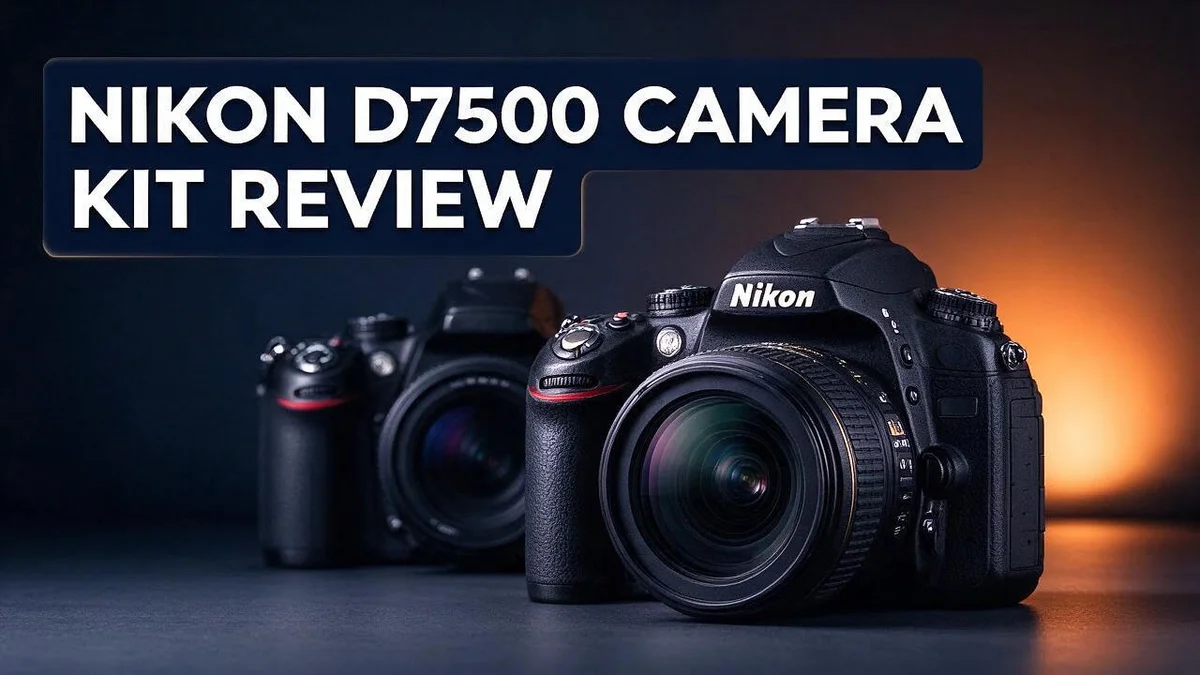
Nikon D7500 Camera Kit Review: Specs, Autofocus, 4K Video and Verdict
Looking for a camera that grows with your skills? The Nikon D7500 camera kit could be the perfect match. It packs professional features into a friendly body.
Its 20.9MP crop sensor captures sharp, detailed images. Fast autofocus with 51 points keeps moving subjects in focus.
You can shoot up to 8 frames per second. That speed helps you catch sports, wildlife, and quick kids’ moments without missing a beat.
Video fans will love the 4K UHD recording. Full HD works too, so you can pick the setting that fits your project.
The 3.2 inch screen and built in wireless features make sharing easy. The deeper grip and improved rubber texture feel secure in your hand, even on long shoots.
Ready to see if this kit fits your style? Keep reading for our full look at its strengths, weaknesses, and who should buy it.
In a Nutshell
-
Comfortable grip for long shoots: The grip feels deeper than the older D7200. Its improved rubber texture keeps your hand secure, so you can shoot all afternoon.
-
Complete viewfinder view: The viewfinder shows 100 percent of the scene. You see exactly what your photo will capture.
-
Highly customizable controls: You can adjust autofocus and many settings to match your style. Many buttons and menus let you change how the camera responds. Your camera adapts as your skills grow.
-
Cropped 4K video: Video recording crops the image a little. Plan your framing with that in mind before you press record.
-
Lighter alternatives to consider: The Sony A6400 and Fujifilm X-T30 weigh less. Pick them if you carry your gear everywhere.
-
A close Nikon rival: The Nikon Z fc uses the same 20.9MP sensor. Reviewers say its autofocus performs better. If autofocus matters most, compare both models side by side.
Image Quality and Sensor

Last update on 2026-10-28 / Affiliate links / Images from Amazon Product Advertising API Some of the links on this website are affiliate links, which means that at no additional cost to you, I earn a commission if you click through and make a purchase. I only recommend products and services that I believe will add value to my readers. Thank you for your support!
Image quality starts with the sensor inside the Nikon D7500. It measures 23.5 by 15.7 millimeters, so it captures a wide area of light.
This crop sensor is smaller than a full frame sensor. Because of that, your lens frames a tighter view. Distant subjects look closer and larger in your photos.
Crop sensors also keep lenses compact. You get solid reach without carrying heavy glass. That balance suits travel and day hikes.
Detail depends on the lens too. A sharp lens lets the sensor show its full potential. Pick lenses with strong reviews for the best results.
Shoot in RAW for more control. RAW files hold more tonal information than JPEG files. You can adjust exposure and white balance later without losing much quality.
Exposure matters more than you think. Bright skies can wash out details in the shadows. Use exposure compensation to protect your highlights.
Low light tests every sensor. Raise the ISO carefully, and check your shots at full size to spot noise.
Color and tone depend on your settings. Pick a white balance that matches the light. Test a few presets before a big shoot.
Printing and cropping. Sharp files give you room to crop tight. Large prints also look clean when you start with a well exposed image.
Storage planning. RAW files take more space on your memory card. Plan for larger cards and a backup drive before a trip.
Good photos start with good light. Shoot during soft morning or late afternoon hours. Harsh midday sun can cause strong shadows.
Test your camera with simple checks. Shoot the same scene at a few settings. Compare the results on a large monitor to learn what your camera does best.
Autofocus and Burst Performance
Autofocus is where the Nikon D7500 really shows its strength. Reviewers call it fast and highly customizable. You can shape how the camera locks on to your subject.
Start with a single focus point when you want precise results. Place it over your subject and wait for the lock. This habit gives you sharp shots before you try more advanced tracking.
Burst shooting needs a steady hand too. At 8 fps, the camera fires quickly, so every frame counts. Hold the shutter halfway down to lock focus first.
Buffer depth is the number of frames the camera stores before it slows down. A fast memory card helps the buffer clear sooner. Choose a card with high write speeds for long bursts.
Shooting RAW plus JPEG fills the buffer faster. If you only need JPEG files for quick sharing, you get more shots per burst. Switch formats to match your task.
Compare this with the Olympus E-M5 II, which reaches 10 fps. The Olympus wins on raw speed. The D7500 still offers a larger APS-C sensor and a deeper grip for steady handling.
Low light can slow any autofocus system. Keep this in mind when you shoot indoor sports or school events. A lens with a wider aperture helps the camera find contrast faster.
Continuous AF works best with moving targets. Let the camera adjust focus as the subject approaches. Give it a second or two to settle before you press the shutter.
Many photographers also prefer the viewfinder for action shots. The optical view shows fast movement smoothly. Your eye and the camera work together as one team.
Practice makes a big difference here. Take a few test bursts at a local park before a big event. You learn how the camera reacts and which settings suit your style.
Viewfinder and Handling
When you raise the camera to your eye, the viewfinder becomes your main window. Optical viewfinders show the scene in real time. You see the subject the moment it moves.
Position your eye squarely behind the eyepiece. A slight angle can cut off the corners of the frame and hide important details.
Glasses wearers often find the eyepiece comfortable to use. You can frame the whole scene without pressing your glasses against the camera.
A diopter dial sharpens the view for your eyesight. Turn it until the info display looks crisp before you shoot.
The eye sensor turns off the rear screen when your eye comes close. The viewfinder takes over automatically, which saves battery and keeps the screen from distracting you.
The info bar along the bottom shows shutter speed, aperture, and exposure. You can read these details without taking your eye away.
Handling starts with your right hand. The main command dial and shutter button sit right under your index finger. Most controls stay within easy reach, so you rarely lift your eye away.
Weight shapes how the camera feels over a long day. With the kit lens attached, the setup feels balanced for everyday walks. A neck strap or wrist strap helps share the load.
Your left hand does the quiet work of steady shooting. Cradle the lens barrel with your palm and tuck your elbows in. This posture reduces shake when the light gets low.
Test the controls before you commit. Try them while wearing thin gloves at a local store or park. You will learn which buttons you can press without looking.
Hold the camera for thirty minutes and note any sore spots. A comfortable grip keeps you shooting longer and helps you catch better moments.
Small habits build confidence over time. Practice holding the camera at home before a trip so the grip feels natural when it matters most.
Top 3 Alternatives
Canon EOS R10


Last update on 2026-10-28 / Affiliate links / Images from Amazon Product Advertising API Some of the links on this website are affiliate links, which means that at no additional cost to you, I earn a commission if you click through and make a purchase. I only recommend products and services that I believe will add value to my readers. Thank you for your support!
The Canon EOS R10 is a lightweight mirrorless camera that feels great in your hands. It has a 24.2-megapixel sensor and fast autofocus. Its subject tracking follows people, animals, and vehicles with ease.
Vlogging fans will love the flip-out screen. You can shoot sharp 4K video with it. It also works well with a wide range of RF lenses, so you can grow your kit over time.
Sony Alpha a6400

Last update on 2026-10-28 / Affiliate links / Images from Amazon Product Advertising API Some of the links on this website are affiliate links, which means that at no additional cost to you, I earn a commission if you click through and make a purchase. I only recommend products and services that I believe will add value to my readers. Thank you for your support!
The Sony Alpha a6400 packs a lot of power into a small body. It offers real-time eye autofocus that keeps portraits sharp. Action shots look smooth thanks to its quick burst mode.
Its APS-C sensor delivers strong detail in good light. Many creators use it for both photos and video. The large lens selection gives you plenty of options as your skills improve.
Fujifilm X-T30 II

Last update on 2026-10-28 / Affiliate links / Images from Amazon Product Advertising API Some of the links on this website are affiliate links, which means that at no additional cost to you, I earn a commission if you click through and make a purchase. I only recommend products and services that I believe will add value to my readers. Thank you for your support!
The Fujifilm X-T30 II is a stylish camera with classic dials. It has a 26.1-megapixel sensor and rich, film-style colors. Photographers enjoy the hands-on controls because they make settings quick to change.
It shoots excellent 4K video and supports Fujifilm’s film simulation modes. Its compact design fits easily in a bag. Street and travel photographers often choose it for everyday shooting.
Video Capabilities
Video is a strong part of the Nikon D7500 kit. The camera records 4K UHD footage at 3840 x 2160 pixels. Full HD recording also works well.
Many people want clips from family events, road trips, or school plays. This camera handles those moments with ease.
Keep one thing in mind first. The 4K mode uses a crop of the sensor.
The frame looks tighter than your photos. A wide lens that feels roomy for stills may feel closer in video. Plan your shots with that in mind.
Reviewers still praise the picture quality. Photo Video Guy notes that the 4K image looks sharp despite the crop.
Light makes a big difference. Clean footage needs steady, even light. Shoot near a window or outside on a cloudy day.
Sound matters too. The internal microphone picks up wind and room noise. A small external microphone gives you cleaner audio. The D7500 has a microphone jack for this purpose.
Wind can make audio sound rough. A small foam cover on the microphone reduces that noise.
Focus needs a plan during video. Set your focus before you press record. Smooth changes look more natural than sudden jumps.
Battery life drops faster when you film. Pack a spare battery for longer days. Also check your memory card speed before a big shoot.
The tilting rear screen helps when you film from low or high angles. You can see the frame without contorting your body.
Start with short clips. Record a few test videos at home. Review them on a computer screen. This simple habit helps you learn the camera fast.
Editing software can help too. Trim your clips to remove shaky starts and long pauses. Short videos keep viewers interested and make sharing easier.
Overall, this kit suits everyday video well. It gives you sharp 4K footage with a few things to plan around.
Connectivity and Kit Lens
Connectivity keeps your photos moving. The Nikon D7500 includes built in wireless connections and Bluetooth. You can send images to your phone or tablet without a card reader. Many people like this for quick social posts after a family dinner or a day at the zoo.
Bluetooth stays on quietly in the background. It keeps the camera linked to your phone while using less power than a full wireless transfer. Your phone can wake the camera for a fast transfer. Pairing takes only a few minutes the first time you set it up.
The wireless link handles the larger jobs. Use it to move full resolution files when you need them now. Test a few transfers at home first so you know the speed. Keep a spare memory card in your bag anyway, because big RAW files can slow down wireless transfers.
Connection also helps with remote shooting. You can use an app on your phone to check framing for group photos. Set the camera on a tripod, then look at the screen from across the room.
The kit lens gives you a useful starting range. The included zoom covers 18 to 55mm. On this APS-C sensor, that range acts like about 27 to 82mm in full frame terms. You get wide views for landscapes and rooms, plus gentle reach for portraits and street scenes.
The maximum aperture changes as you zoom. It starts at f/3.5 at the wide end and narrows to f/5.6 when zoomed in. A variable aperture is common in kit lenses. Stay near the wide end when light gets dim, because the brighter opening lets in more light.
Vibration reduction helps with handheld shots. The lens steadies small hand movements, so slower shutter speeds feel more forgiving. Try it at dusk with your elbows tucked close to your body.
Many photographers add a faster prime lens later. A prime gives a brighter aperture and softer backgrounds. The kit zoom still makes a solid first lens while you learn your style and favorite subjects.
Pros and Cons
Pros
- Autofocus is fast and reliable. The 51-point system tracks moving subjects well.
- You can customize the controls to match your shooting style.
- Picture quality stays high in 4K. The image still looks sharp despite the crop.
- The viewfinder shows 100% of the scene, so you see what you capture.
- Eight frames per second keeps action sharp.
Cons
- Lighter rivals like the Sony A6400 and Fujifilm X-T30 exist.
- The Olympus E-M5 II shoots faster at 10 fps.
- The Nikon Z fc offers autofocus that reviewers rate higher.
Who Should Buy It
Hobbyists moving up from a smartphone will find this kit a clear step forward. Phones take nice snapshots, but they struggle in dim rooms and fast action. This camera gives you real control over focus, exposure, and color.
Many people feel stuck in automatic mode. This camera removes that limit.
Another good match is someone with an older Nikon DX body. Reviewers say the grip feels deeper and the rubber texture is better than the D7200. Long shooting days feel more comfortable in your hands. Many lenses you already own may fit, which keeps your setup simple.
Beginners who like learning by doing also benefit from clear menus and helpful guides. The dials let you change settings quickly. You can test ideas, check the results, and adjust again right away.
Travelers who want one camera for many scenes can also make good use of it. The kit lens covers landscapes, street scenes, and simple portraits. You can capture a full day out without swapping gear.
Students taking photography classes often need a camera that handles many assignments. This kit covers portraits, landscapes, and simple studio setups. Manual modes teach the basics that instructors expect you to know.
Sports fans who shoot very fast action may want a camera built for that task. This kit works well for everyday movement, but it is not the top pick for intense speed. Think about your main subjects before you decide.
Photographers who enjoy editing will also feel at home. The high resolution sensor gives you room to crop and adjust. You keep plenty of detail when you print large or share closer views.
Overall, this kit suits people who want a capable camera that grows with their skills. It rewards patience and regular practice. Take a few test shots each week and compare them. Progress shows up faster than you think.
Final Verdict
Our final verdict is simple. The Nikon D7500 suits people who want more control than a smartphone gives. It also suits those who plan to grow with their skills.
The body feels like a serious tool in your hands. Its deeper grip makes long shooting sessions more comfortable. Your fingers rest in a natural spot every time.
Think about your learning path for a moment. A camera that matches your growing skills keeps you from upgrading too soon. You can focus on improving your eye instead of chasing new gear.
Lens choice shapes your results more than most people expect. The kit lens teaches you framing and light without pressure. Later, you can add lenses for portraits, landscapes, or wildlife.
Some buyers should look elsewhere. Pure video shooters may prefer a body built for filming. People who chase the fastest bursts may want to compare other models first.
Mirrorless fans often weigh this camera against newer designs. The D7500 uses a traditional optical design that many photographers still love. Mirrorless models feel lighter but work differently. Try both in a shop before you decide.
Real world use matters more than spec sheets. Take the camera outside on a windy day. Shoot indoors under warm lamps. You will learn quickly how it handles your favorite scenes.
Consider your daily routine too. Carry the camera for a week before you judge it. Small habits reveal whether the controls fit your hands and your mind.
Ask yourself one question. Do you want a camera that teaches you while you shoot? If the answer is yes, this kit deserves a close look.
Keep your goals in mind as you choose. Write down the subjects you want to photograph most. Then test the camera against those subjects.
Overall, this camera earns a confident recommendation. It offers dependable results, a comfortable body, and room to grow. It makes a smart partner for your creative journey.
Frequently Asked Questions
What lens comes with the kit?
The kit includes an AF S 18 to 55mm VR II lens. This zoom covers wide landscapes and close everyday portraits with ease. It gives you a flexible starting point for most daily shooting. You can add more lenses later as your interests grow.
Can I send photos to my phone?
Yes, the camera uses wireless links such as Bluetooth to connect with your phone. You can pair the devices and move images in a few moments. This comes in handy when friends want a quick preview. Check your phone app settings before your first trip.
Does the screen help with tricky angles?
Yes, the 3.2 inch screen lets you view the scene from unusual positions. You can shoot low to the ground or high above a crowd. Checking the frame on the screen saves time and guesswork. Your shots often feel more creative as a result.
Is the grip comfortable during long shoots?
The grip sits deeper than the older D7200, and the rubber texture feels better in your hand. Your fingers stay relaxed during long days outside. A comfortable body means more time shooting and fewer breaks.

Hi, my name is Lily you can say i am a gadget hunter at this point. Welcome to Gadget Gallery The Gallery of Gadget Reviews