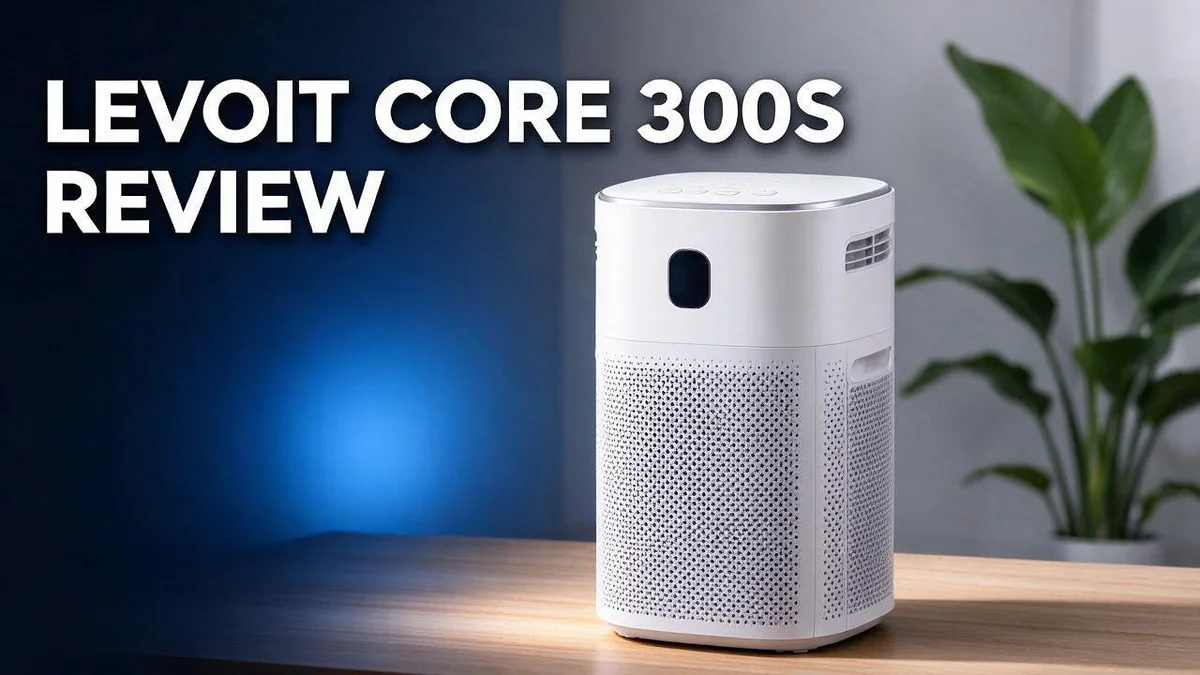
Levoit Core 300S Review: Filtration, Noise, Smart Features and Room Coverage
Is your bedroom air really clean? Many people wake up with stuffy noses and itchy eyes. A good air purifier can help. The Levoit Core 300S is one option worth a closer look.
This smart air purifier uses True HEPA filtration across three filter stages. It also tracks air quality with onboard sensors. You can control it from your phone through the app, or switch on sleep mode at night.
Many owners praise its quiet operation. Parents often choose it for bedrooms and nurseries. Some users also report relief from allergies and pet dander.
Still, it is not perfect. Its maximum noise level reaches 50 dB, which runs higher than the standard Core 300. Keep reading to see if this model fits your home.
In a Nutshell
- Best for medium rooms: Listed coverage differs from one source to another, so measure your room before you decide. Smaller sibling models suit tiny spaces better.
- Sleep mode suits nighttime use: This setting runs the unit at lower speeds while you rest. It helps parents with nurseries and light sleepers who share a bedroom.
- Phone control adds easy adjustments: You can change settings from a smartphone app without getting out of bed. The air quality sensors also let you check readings at a glance.
- Noise is the main concern: The maximum level reaches 50 dB, which runs louder than the standard Core 300. Light sleepers should test it at night before settling in.
- Allergy relief depends on your triggers: Some owners report better comfort with pet dander, though results vary from home to home. Regular cleaning helps you get the best results.
- Compare sibling models first: The Core 200S, Core 400S, and Vital 100S may fit different room sizes and needs. Reading a few owner reviews can help you decide.
Filtration and Air Cleaning Performance


Last update on 2026-10-28 / Affiliate links / Images from Amazon Product Advertising API Some of the links on this website are affiliate links, which means that at no additional cost to you, I earn a commission if you click through and make a purchase. I only recommend products and services that I believe will add value to my readers. Thank you for your support!
Clean air starts with the filter. Air enters the unit and passes through several layers. Each layer catches a different size of particle. Larger debris gets trapped first, so the finer layers last longer.
True HEPA does the heavy lifting. A True HEPA filter captures at least 99.97 percent of particles that measure 0.3 microns. Many fine irritants, such as smoke particles, fall into this range. This standard matters when you compare models.
Fan speed changes cleaning time. Higher speeds pull more air through the filters each minute. Lower speeds run more quietly but take longer to clean the same space.
Filter life depends on your home. A home with pets, smokers, or heavy foot traffic fills the filter faster. Check the filter indicator often. Replacing it on time keeps the airflow strong.
Sensors show real changes. The air quality sensors give a rough reading of particles in the room. Watch the display when you cook, vacuum, or open a window. You can see how quickly the air improves.
Expectations need to stay realistic. A purifier cleans the air that passes through it. It does not remove every odor, though. Gas fumes and strong cooking smells may linger, so remove the source when you can.
Placement changes results. Keep the unit away from walls, corners, and heavy curtains. Open space lets air flow in and out freely. Run it with doors and windows closed for the best effect.
Use it as one part of a plan. Vacuum often, wash bedding weekly, and control humidity. The purifier works best alongside these habits. Clean air builds up over time when you stay consistent. Small changes add up quickly.
Steady use brings lasting comfort. Many people notice a fresher feel after running the unit for a while. Keep it on during sleep for steady results.
Noise Levels and Sleep Mode
Noise is the first thing most sleepers notice. A steady fan hum can either fade into the background or keep you awake. The maximum level of 50 dB sounds similar to light rain or a quiet office. Many people find that kind of sound easy to ignore after a few nights.
Still, your bedroom and daily habits shape the final result.
Placement changes how loud the unit feels. Set the purifier on the floor, away from walls and corners. Corners can bounce sound back into the room and make it seem louder. Keep the unit a few feet away from your pillow for a calmer night.
Hard surfaces such as bare floors and tile can add echo. Rugs and curtains soak up some of that extra noise.
Listen during the day first. Run the unit on a normal setting in your bedroom. Stand beside it and notice the tone. A low hum is easier on the ears than a high whine or a rattle. If you hear a rattle, check that the filter sits securely and the base is level.
Think about your sleep style. Light sleepers often notice fan noise more than heavy sleepers do. Parents should test the sound in a nursery before placing the unit there. Babies and toddlers often sleep through a steady sound that stays consistent.
Consistency matters more than volume. Sudden changes in pitch wake many people up. A smooth, steady tone usually causes fewer disturbances during the night.
Light sleepers often notice fan noise first. Keep that in mind when you choose a spot for the unit.
Compare with your current setup. If you already sleep with a fan, compare the two. The new unit should feel just as calm.
Final thought. Test the Core 300S for a night or two. If the hum blends into your sleep routine, it fits well in your bedroom.
App Control and Air Quality Sensing
Setting up the app takes only a few minutes. Keep your phone close during pairing. A steady internet connection helps the unit respond quickly.
The app also tracks filter status. Checking it every few weeks helps you plan replacements ahead of time.
Trend lines tell a better story than single numbers. The sensors send particle readings to your phone. A reading that climbs after cooking or vacuuming shows when the room needs extra cleaning.
Auto mode depends on those readings. The unit raises or lowers fan speed as particles change. You spend less time guessing the right setting each day.
A particle sensor does not catch every odor. Strong smells from cooking, paint, or cleaning products may still linger. Open a window for a few minutes when you need a fresh start.
Use timers in the app to match your routine. Many people run the unit before arriving home or before bedtime. Check whether your version offers this option first.
If your app sends alerts, turn them on for busy days. A warning can remind you to run the unit during heavy cooking or dusty chores. Alerts work best when you respond to them quickly.
Parents can also check readings from another room. This helps you see how the air looks without walking in and disturbing the space.
Keep the sensor clear for accurate readings. Dust the sensor area with a soft cloth now and then. Keep curtains, bedding, and plants at a distance so the readings stay accurate.
Think of the app as a guide, not a judge. Your own comfort, sniffles, and sleep quality still matter most. Use the numbers to support your choices, not replace them.
Top 3 Alternatives
If you want a different option, these three air purifiers are worth a closer look. Each one cleans indoor air in its own way.
Coway Airmega 240

Last update on 2026-10-28 / Affiliate links / Images from Amazon Product Advertising API Some of the links on this website are affiliate links, which means that at no additional cost to you, I earn a commission if you click through and make a purchase. I only recommend products and services that I believe will add value to my readers. Thank you for your support!
The Coway Airmega 240 suits large living rooms and open spaces. It uses a True HEPA filter and activated carbon to trap dust, pollen, and odors.
Its air quality sensor shows changes in real time. The unit runs quietly on low settings, so it works well overnight.
Blueair Blue Pure 211

Last update on 2026-10-13 / Affiliate links / Images from Amazon Product Advertising API Some of the links on this website are affiliate links, which means that at no additional cost to you, I earn a commission if you click through and make a purchase. I only recommend products and services that I believe will add value to my readers. Thank you for your support!
The Blueair Blue Pure 211 feels light and simple to move. It pairs a particle filter with activated carbon to reduce smoke and smells.
Its fabric pre-filter catches larger particles first. It fits bedrooms, home offices, and small apartments well.
Honeywell HPA300

Last update on 2026-10-28 / Affiliate links / Images from Amazon Product Advertising API Some of the links on this website are affiliate links, which means that at no additional cost to you, I earn a commission if you click through and make a purchase. I only recommend products and services that I believe will add value to my readers. Thank you for your support!
The Honeywell HPA300 is a strong choice for allergy sufferers. It features a True HEPA filter that captures very fine particles.
Its Air Mode adjusts fan speed to match the air in your room. You can also use Wi-Fi control to manage it from your phone.
Room Coverage and Sizing
Room size matters more than most buyers expect. A purifier works best when its rated coverage matches your space. Check that number before you order.
Sources do not agree on one number. Some list up to 219 square feet for the base Core 300. Another source quotes 1,058 square feet for a different Levoit model. An Australian listing gives 54 square meters.
Why do the numbers differ? Each brand tests coverage under its own conditions. Many tests assume a closed room and a set number of air changes each hour.
Measure your room first. Multiply length by width to get square feet. Then compare that total with the rated area on the box.
Open layouts need extra thought. A purifier in a living room that flows into a kitchen must clean a much bigger zone. Closed bedrooms are simpler, especially when the door stays shut.
Ceiling height changes the math. Standard ratings assume ordinary ceilings. A room with tall ceilings holds more air, so the unit needs more time to refresh it.
Long, narrow rooms can leave stale air near the far end. Count the full length of the space, not only the main area, when you measure.
Think about your nearby sizes too. The Levoit Core 200S suits smaller rooms, while the Levoit Core 400S handles larger spaces. Compare both ratings before you decide.
Buy with a little extra room. A unit rated slightly above your room size works with less strain. It also keeps clean air moving when doors open and close.
Busy kitchens and frequent guests raise the workload too. Pick a size that matches your daily life, not only the floor plan.
Ask yourself a simple question. Do you need the unit to clean one bedroom or a whole apartment? Your answer points you to the right size.
Coverage is a starting point. Use the rating as a guide, then test the unit in your space and watch how fresh the air feels over time.
Filter Replacement and Running Costs
Filters do most of the hard work. The Levoit Core 300S uses True HEPA filtration across three stages. Each stage targets different particles, so the air feels cleaner over time.
A filter does not last forever. As dust builds up, airflow slows and capture rates drop. Fresh filters keep the unit performing as intended.
Watch the filter indicator. The app shows when a change is due. Pay attention to these alerts instead of waiting for odd smells or weaker results.
Think ahead about replacements. Keep a spare filter on hand before the old one wears out. This prevents long gaps in clean air, especially during pollen season or when pets shed heavily.
Check that every replacement matches your exact model number. Mixing parts can lead to poor fit and reduced efficiency. Read the packaging before you order.
Changing the filter takes only minutes. Turn the unit off and open the cover. Swap the old filter, then close everything tightly. Follow the steps in the manual so the seal stays secure.
Keep a simple log. Write the install date on the filter sheet or in a phone note. This gives you a clear record. It also helps you spot patterns, such as faster buildup during dry or dusty months.
Clean the outside too. Dust settles on the vents and body over time. Wipe the exterior with a dry cloth every few weeks. Keep the intake area clear so air can flow freely.
Ongoing upkeep shapes the daily experience. A maintained unit runs quieter and works more steadily. Neglect often shows up as louder operation or uneven air.
Some owners choose a different model later. One Reddit user moved to a Levoit Vital 100S, although the reason was not fully shared. It is hard to say how much upkeep played a role.
Plan your routine early. Note the replacement schedule on your calendar. Small habits like this keep the purifier doing its best job all year.
Pros and Cons
Pros
– It runs quietly during everyday use.
– Sleep mode suits bedrooms and nurseries.
– Many users report relief for allergies.
– It helps with pet dander around the home.
Cons
– Maximum noise reaches 50 dB, above the standard Core 300.
– One Reddit user replaced it with the Levoit Vital 100S.
– The Core 200S may suit smaller rooms better.
Who Should Buy It
Not every home needs the same air purifier. This model suits some buyers better than others.
Light sleepers often appreciate a unit that runs quietly after dark. A steady, low hum can feel calm rather than distracting.
New parents want clean air near a crib. They also prefer a quiet machine that will not disturb sleep.
Allergy sufferers notice dust first. If dust makes your eyes itch or your nose run, a purifier like this can help clear the air.
Pet owners face fur and dander every day. Homes with cats or dogs often collect dander on sofas, rugs, and bedding. Filtering the air helps keep those particles from settling.
Renters often need gear they can move. This model can shift from room to room without much fuss.
Owners of big living rooms may want to compare other models. The Levoit Core 400S and Eleva 300X are worth a look.
People who dislike noise should test the unit first. The top level reaches 50 dB, so full speed may feel loud in a quiet room.
Busy households with mixed schedules gain the most. Clean air keeps running while people come and go, so nobody has to remember to switch it on.
Home workers often sit near a purifier for hours. A quiet unit on a desk can help keep focus during long workdays.
Families with young children often want air care that stays simple. Parents may also appreciate a device that runs without needing constant attention.
Many shoppers simply want fresher air at home and peace at night. This model suits people who value quiet use and clear air quality tracking.
Some buyers fit this model well. Others should look elsewhere. Take a few minutes to think it through. Match your room, your health needs, and your sleep habits to the features above.
Final Verdict
The Levoit Core 300S makes a strong case for everyday use. It pairs True HEPA filtration with app control. Most homes get fresher air with very little effort.
Think of it as a steady helper. It works well in a bedroom, a home office, or a family space. Set it up once and let it run.
The air quality sensors do much of the thinking for you. They respond to changes in the room, so you can rely on the readings instead of guessing when air needs attention.
The main compromise is sound. The unit can get louder at higher settings, so it may not suit every sleeper. Think about how your household reacts to background noise before you commit.
Room ratings deserve a closer look too. Published coverage figures differ between listings and regions. Measure your room, then compare that size with the rating you see.
Setup is simple. Connecting the app takes only a few minutes. Naming the room and checking the status screen helps you keep track of air quality from anywhere in the house.
Ask yourself a few simple questions. Do you want calm nights and clean air in one room? Do you need a unit for a large open plan? If you answer yes to the first and no to the second, this model fits well.
Compare it with other models in the same family before you decide. A closer look at each option helps you match features to your layout and daily habits.
Final thoughts: The Levoit Core 300S offers smart features, clean filtration, and steady operation for many everyday homes. Test it in your own space. You will know quickly whether it belongs there.
Frequently Asked Questions
Where should I place the Levoit Core 300S in my home?
Put it in the room where you sit or sleep most. Keep it away from walls and corners so air can flow freely. Open space around the unit gives the best results.
How do I keep the unit working well over time?
Dust the outside with a dry cloth every few weeks. Gently wipe the sensor area so readings stay accurate. Small habits keep the unit running smoothly.
Does it help with smoke or cooking odors?
The sources for this review do not make clear claims about odors. Read the product listing for details. Look for specific odor claims before you rely on the unit for strong cooking smells.
What should I check before I buy?
Measure your room first. Think about how much noise you can accept at night. Decide whether you want app control or simple buttons. A short checklist helps you choose with confidence.

Hi, my name is Lily you can say i am a gadget hunter at this point. Welcome to Gadget Gallery The Gallery of Gadget Reviews