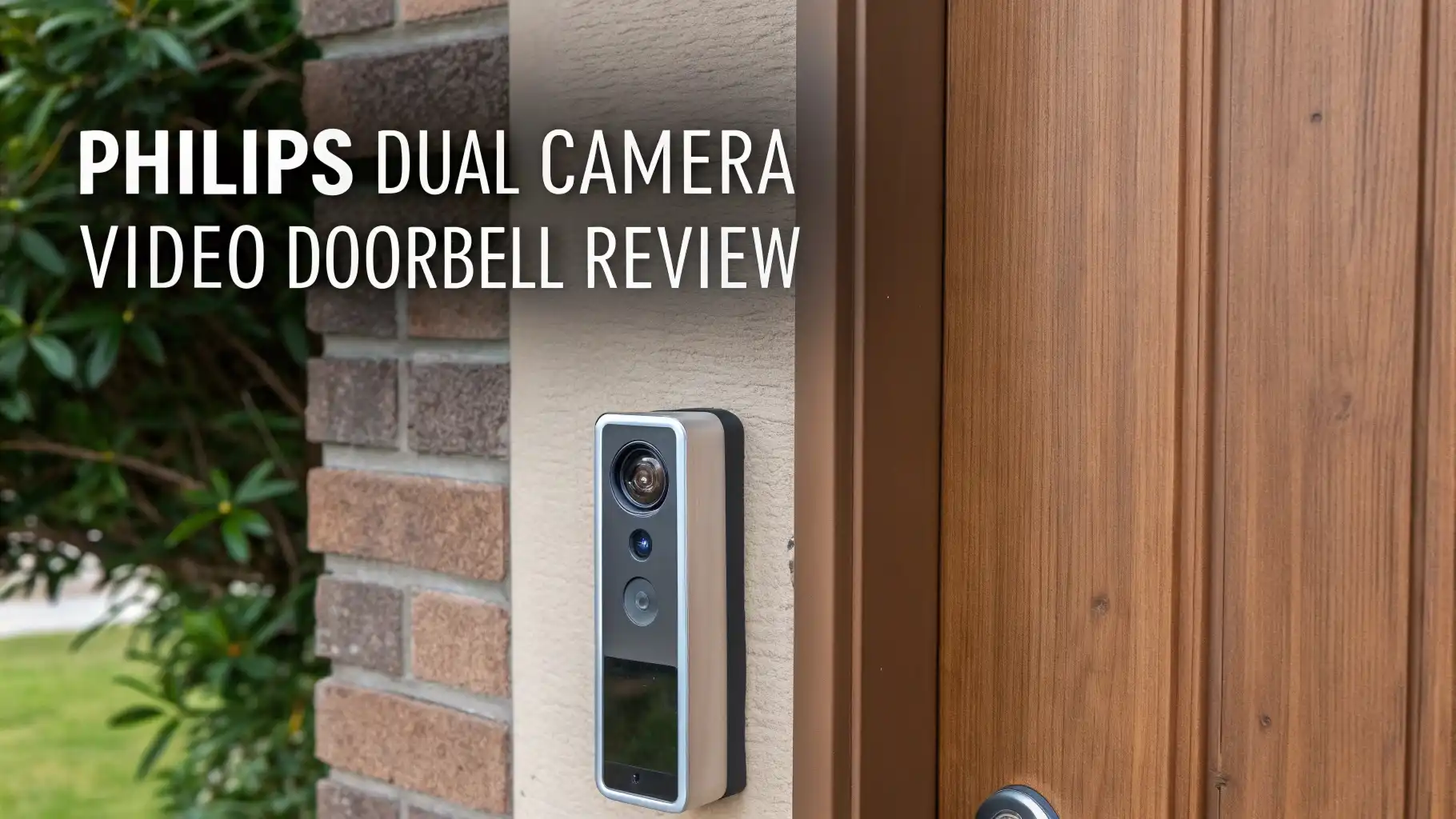
PHILIPS Dual Camera Video Doorbell Review: Your Complete Guide
Picture this. You hear the doorbell ring while you are cooking dinner. Your hands are covered in flour. You cannot get to the door quickly. What if you could see who is there without moving an inch?
The PHILIPS Dual Camera Video Doorbell makes this possible. This smart device transforms how you monitor your front door. You get crystal clear video.
The PHILIPS Dual Camera Video Doorbell stands out in this crowded market. It brings innovative dual camera technology to your doorstep. This review explores everything you need to know about this remarkable device.
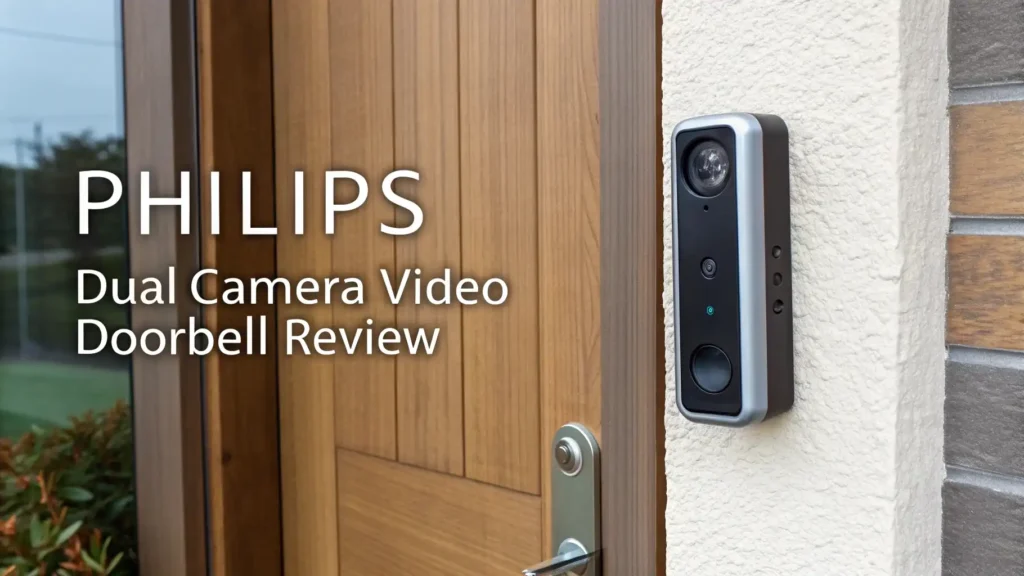
Key Takeaways:
- Superior Video Quality: The device captures footage in stunning 2K HD resolution with HDR support. This means you see every detail clearly, whether it is bright daylight or dim evening light. The dual camera system provides two viewing angles, giving you comprehensive coverage of your doorstep and package delivery area.
- No Monthly Fees Required: Unlike many competitors, this doorbell includes 8GB of secure local storage. You do not pay subscription fees to access your recordings. All footage is encrypted with AES 128 bit encryption, ensuring your privacy stays protected.
- Flexible Installation Options: The doorbell works with both battery and wired power configurations. You choose what fits your home best. Battery operation provides wire free flexibility. Wired installation ensures continuous power without battery changes.
- Smart Home Integration: The device connects seamlessly with Alexa and Google Assistant. You can view your doorbell feed on smart displays. You can create automation routines. Voice commands make operation hands free and convenient.
- Advanced Motion Detection: The system features customizable motion zones. You decide which areas trigger alerts. This reduces false notifications from passing cars or pedestrians. You only get alerts that matter to you.

What Is the PHILIPS Dual Camera Video Doorbell
The PHILIPS Dual Camera Video Doorbell represents the brand’s entry into the competitive smart home security market.
This device belongs to the PHILIPS 7000 Series lineup. It earned a Red Dot Design Award in 2024 for innovation and design excellence. The doorbell combines cutting edge technology with user friendly features.
The standout feature is the dual camera configuration. Most video doorbells use a single camera. PHILIPS took a different approach. The main camera points straight ahead at eye level.
A second camera angles downward. This innovative setup captures both visitor faces and packages at your feet. You see the complete picture of what happens at your doorstep.
Understanding the Dual Camera Technology
The dual camera system sets this doorbell apart from competitors. Traditional video doorbells mount a single camera at eye level. This works well for seeing faces. However, it misses what happens lower down. Packages left at your door remain outside the viewing angle. You cannot verify if deliveries arrived safely.
PHILIPS solved this problem creatively. The primary camera captures a standard 160 degree field of view. It records everything happening at face level and beyond. The secondary camera angles down at approximately 45 degrees. It focuses specifically on the ground area where delivery drivers place packages.
This dual perspective provides comprehensive coverage. You see who rings the doorbell. You also monitor packages throughout their time at your door. The system can alert you when motion occurs in the lower detection zone.
Video Quality and Performance Features
The PHILIPS Dual Camera Video Doorbell delivers 2K resolution video. This translates to 2560 x 1440 pixels. The image quality surpasses standard 1080p HD. You see finer details. Text on delivery packages becomes readable. Facial features appear sharp and clear. The difference is noticeable when you zoom into footage.
HDR technology enhances video quality further. HDR stands for High Dynamic Range. This technology balances bright and dark areas within the same frame. Imagine someone standing in shadow with bright sunlight behind them.
Standard cameras struggle with this scenario. They either overexpose the background or underexpose the person. HDR solves this problem. It captures detail in both bright and dark areas simultaneously.
The doorbell features color night vision. Traditional night vision produces black and white images. Color night vision maintains natural colors even in low light. You identify clothing colors. You distinguish between different colored vehicles.
Top 3 Alternatives for PHILIPS Dual Camera Video Doorbell


Installation Process and Setup Requirements
Installing the PHILIPS Dual Camera Video Doorbell takes about 20 to 30 minutes for most homeowners. The process does not require professional help. You can handle it yourself with basic tools. The package includes everything you need. You get mounting brackets, screws, anchors, and detailed instructions.
Battery powered installation offers the simplest approach. You charge the included rechargeable battery pack fully before starting. The battery slides into the doorbell unit. You mark the mounting location on your wall or door frame.
Use the provided level to ensure straight placement. Drill pilot holes using the mounting template. Insert the wall anchors. Screw the mounting bracket into place. Finally, snap the doorbell unit onto the bracket.
Wired installation requires existing doorbell wiring. Most homes built in the last 30 years have this wiring in place. You turn off power at the circuit breaker before starting. Remove your old doorbell. Connect the existing wires to the PHILIPS doorbell terminals.
Mobile App Features and User Experience
The PHILIPS Home Access app serves as your command center for the doorbell. The interface uses a clean, intuitive design. You access all features with just a few taps. The home screen displays a live view thumbnail from your doorbell. Tap it to see real time video instantly.
Live View connects you to your doorbell cameras on demand. You see what is happening right now. The video stream starts within 2 to 3 seconds typically. The dual camera angles appear side by side or in picture in picture mode. You switch between views with a simple tap.
Two way audio communication lets you speak with visitors remotely. Press and hold the microphone button. Speak clearly into your phone. Your voice plays through the doorbell speaker. Release the button to hear the visitor’s response. The audio quality is clear and intelligible. Visitors hear you without echo or distortion.
Motion detection alerts arrive as push notifications on your phone. You receive an alert whenever the doorbell detects movement. The notification includes a snapshot image. You tap it to view the full video clip. The app distinguishes between different motion types.
Motion Detection and Smart Alert System
Motion detection technology determines how useful your video doorbell becomes day to day. Poor motion detection floods you with irrelevant alerts. Smart motion detection keeps you informed without overwhelming you. The PHILIPS Dual Camera Video Doorbell strikes a good balance.
The system uses PIR sensors (Passive Infrared) to detect motion. These sensors pick up heat signatures from people and animals. The dual camera setup provides two separate detection zones. You customize each zone independently through the app.
Activity zones let you draw custom boundaries on your doorbell’s viewing area. Imagine your doorbell captures part of a busy sidewalk.
You do not want alerts every time someone walks past. You draw an activity zone that covers only your porch and steps. Now you receive alerts only when motion occurs within that specific area. This feature dramatically reduces false notifications.
Storage Options and Data Security
Storage capability matters tremendously for video doorbells. You need to save footage for later review. Different brands take different approaches. Ring and Nest require monthly subscriptions for cloud storage. Other brands offer limited free storage. PHILIPS takes a middle ground approach that emphasizes privacy.
The doorbell includes 8GB of built in storage. This memory exists locally within the device itself. Your videos never leave your home unless you choose to download them.
The storage operates on a loop. When the memory fills up, the oldest videos automatically delete to make room for new recordings. Depending on settings and usage, 8GB typically stores several days to a couple weeks of motion activated recordings.
AES 128 bit encryption secures all stored footage. This military grade encryption makes your videos virtually impossible to hack. Even if someone physically stole your doorbell, they could not access the encrypted videos without your account credentials.
The PHILIPS system does not require monthly subscription fees for basic storage and features. You purchase the doorbell once. All core functionality remains free forever.
Smart Home Integration Capabilities
Modern smart home ecosystems thrive on device compatibility. Your doorbell should work smoothly with other smart products you own. The PHILIPS Dual Camera Video Doorbell offers solid integration options.
Amazon Alexa compatibility allows voice control and automation. You can say “Alexa, show me the front door” to view doorbell footage on Echo Show devices.
You create routines that trigger when the doorbell button is pressed. For example, you might configure your smart lights to turn on automatically when someone rings the doorbell after dark.
Google Assistant integration provides similar capabilities. You use voice commands like “Hey Google, show me the doorbell camera” to stream video to Nest Hub displays or Chromecast enabled TVs. You incorporate the doorbell into Google Home routines and automation sequences.
The doorbell works independently as well. You do not need Alexa or Google Assistant to use it. The PHILIPS Home Access app provides complete functionality on its own. Smart home integration simply adds convenience and automation options.
Battery Life and Power Management
Power management directly impacts your daily experience with a battery powered doorbell. Frequent battery changes become annoying quickly. The PHILIPS Dual Camera Video Doorbell offers both battery and wired power options.
Battery operation uses a removable rechargeable battery pack. The battery slides out of the doorbell for charging. You do not need to unmount the entire unit. Battery life varies based on usage. Light use with few events might last 3 to 6 months. Heavy use with constant motion alerts drains batteries faster, lasting 6 weeks to 3 months.
Several factors affect battery longevity. Cold weather reduces battery performance significantly. Live view sessions drain power quickly.
Frequent motion events and recordings consume more energy than quiet days. WiFi connection strength matters too. Weak signals force the doorbell to use more power maintaining the connection.
The battery charges using a standard USB C cable (included). Charging from empty to full takes approximately 6 to 8 hours. You can purchase a second battery to swap instantly. While one battery powers the doorbell, the other charges indoors. This eliminates downtime.
Weather Resistance and Durability
Your video doorbell lives outside 24/7. It faces rain, snow, heat, cold, wind, and sun. Durability matters tremendously. A doorbell that fails after one harsh winter wastes your money.
The PHILIPS Dual Camera Video Doorbell carries an IP65 weather resistance rating. This certification means dust cannot enter the device. Water sprayed from any direction will not damage internal components. The doorbell handles rain, snow, and ice without problems.
The operating temperature range spans minus 4 degrees Fahrenheit to 122 degrees Fahrenheit. This covers most climates worldwide. The doorbell works reliably through frigid winters and scorching summers. Extreme cold does affect battery life, but the device continues functioning.
The housing uses durable plastic materials designed for outdoor exposure. UV resistant coatings prevent sun damage and fading. The finish resists cracking and yellowing over time. The doorbell button features a waterproof seal. Rain and snow cannot seep into the mechanism.
Comparing PHILIPS to Competitors
The video doorbell market includes numerous strong competitors. Understanding how PHILIPS stacks up helps you make an informed decision.
Ring doorbells dominate market share. Ring offers wider product variety from budget to premium models. Ring provides better smart home integration and ecosystem compatibility.
However, Ring requires paid subscriptions for video storage. Basic Ring plans cost $4 monthly. PHILIPS includes free local storage. Over 3 years, Ring subscription costs exceed $140, nearly matching the PHILIPS doorbell’s full purchase price.
Google Nest Doorbell provides excellent video quality and smart features. Google Assistant integration works flawlessly. The design is sleek and modern.
Nest also requires subscriptions for video history. Nest Aware starts at $6 monthly. The Google ecosystem lock in might concern some users. PHILIPS offers more independence from major tech ecosystems.
Common Issues and Troubleshooting Tips
No product is perfect. Users report some common issues with the PHILIPS Dual Camera Video Doorbell. Understanding these problems helps you avoid frustration.
WiFi connectivity issues appear most frequently. The doorbell requires strong 2.4 GHz WiFi signal. Thick walls, metal siding, or long distances from the router cause connection problems. The doorbell may disconnect repeatedly or fail to stream video smoothly.
Solutions include moving your WiFi router closer, adding a WiFi extender, or upgrading to a mesh network system. You can also adjust your router settings to prioritize 2.4 GHz signal strength.
Motion detection sensitivity complaints go both ways. Some users receive too many alerts from irrelevant motion. Others miss important events because sensitivity is too low.
The solution involves carefully adjusting sensitivity settings and drawing precise activity zones. This requires experimentation and fine tuning for your specific environment.
App notification delays frustrate users occasionally. Push notifications should arrive within seconds of motion detection. Some users experience delays of 10 to 30 seconds or more. This often relates to smartphone settings rather than doorbell issues.
Real World Performance and User Feedback
Customer reviews provide valuable insight into real world performance. The PHILIPS Dual Camera Video Doorbell receives generally positive ratings around 4.3 out of 5 stars on major retailers.
Users praise the video quality consistently. The 2K resolution impresses reviewers. Many specifically mention being able to read text on packages and clearly identify facial features. Night vision performance receives positive comments. Users appreciate seeing in color rather than grayscale even after dark.
The dual camera feature generates enthusiastic feedback from online shoppers. Package theft anxiety runs high. The downward facing camera provides peace of mind. Users report checking their doorbell app immediately after delivery notifications. They verify packages arrived safely without opening the front door.
Battery life generates mixed opinions. Usage patterns vary dramatically between households. Some users find battery life acceptable. Others wish it lasted longer. Wired installation users obviously do not encounter this concern.
The chime volume receives occasional criticism. Some users find it too quiet. Others wish for more ringtone variety. These complaints are minor but worth noting.
Value for Money and Overall Assessment
Evaluating value requires balancing price against features, quality, and long term costs. The PHILIPS Dual Camera Video Doorbell typically retails between $200 to $250. This places it in the mid range pricing tier.
Competitors offer similar features at various price points. Budget options cost $50 to $100 but compromise on video quality and features. Premium options cost $250 to $400 with advanced AI and superior build quality. PHILIPS occupies the sensible middle ground.
The unique dual camera system adds genuine value. This feature differentiates PHILIPS from most competitors. Package monitoring capability addresses a real consumer need. You are not paying extra for gimmicks.
Subscription free operation enhances long term value significantly. Calculate 3 years of use. Ring subscription costs $144. Nest subscription costs $216. Arlo subscription costs similar amounts. PHILIPS saves you this money. The initial purchase price difference shrinks dramatically when accounting for subscription savings.
Final Thoughts and Recommendations
The PHILIPS Dual Camera Video Doorbell earns a solid recommendation for most homeowners seeking smart security. The device successfully balances features, quality, and value. It excels in several key areas while maintaining reasonable pricing.
Who should buy this doorbell? Online shoppers concerned about package theft benefit tremendously. The dual camera system specifically addresses this problem.
Homeowners avoiding monthly subscriptions find excellent value. Those wanting strong video quality without premium pricing should consider PHILIPS seriously. DIY installers appreciate the straightforward setup.
Who might choose alternatives? Apple ecosystem enthusiasts need HomeKit compatibility that PHILIPS lacks. Users demanding cutting edge AI features should explore premium options.
Those prioritizing extremely long battery life might prefer lower resolution competitors that consume less power. Homeowners with very large properties might need doorbells with longer wireless range.
FAQs
How do I install the PHILIPS Dual Camera Video Doorbell without existing wiring?
You can install the doorbell using battery power only. The package includes a rechargeable battery pack. You charge it fully before installation. Mount the included bracket to your wall or door frame using the provided screws and anchors. Snap the doorbell unit onto the bracket. Connect it to your WiFi network through the mobile app. The installation takes about 20 minutes. No electrical wiring is required.
Does the PHILIPS doorbell work with Apple HomeKit?
No, the PHILIPS Dual Camera Video Doorbell does not currently support Apple HomeKit. You cannot add it to the Apple Home app. Siri voice control is not available. The doorbell works with Amazon Alexa and Google Assistant instead. PHILIPS has not announced plans to add HomeKit compatibility. If HomeKit integration is essential for your smart home setup, you should consider alternatives like the Logitech Circle View Doorbell or Netatmo Smart Video Doorbell.
Can I use the doorbell without WiFi?
The doorbell requires WiFi connection for most features. Without WiFi, you cannot receive notifications on your phone. You cannot view live video remotely. You cannot access stored recordings through the app. However, the doorbell still functions as a basic doorbell locally. The wireless chime will ring when someone presses the button. The device continues recording motion events to local storage.
How long does the battery last on a single charge?
Battery life varies significantly based on usage patterns. Light use with few motion events and no live viewing can last 3 to 6 months. Average use typically provides 2 to 4 months of operation. Heavy use with frequent motion alerts, regular live viewing, and cold weather conditions may require charging every 6 to 8 weeks. You can extend battery life by reducing motion sensitivity, limiting live view sessions, and adjusting video quality settings.
What happens to my videos if the doorbell loses power?
Videos stored in the 8GB local memory remain safe if the battery dies or power is interrupted. The storage is non volatile memory. Your recordings do not delete when power is lost. Once you recharge the battery or restore wired power, you can access all previously stored videos through the app. However, the doorbell cannot record new events while powered off. It also cannot send notifications during power outages.
Is there a warranty included with the PHILIPS doorbell?
PHILIPS typically provides a limited warranty covering manufacturing defects. The standard warranty period is usually one year from purchase date. The warranty covers defects in materials and workmanship under normal use. It does not cover damage from accidents, misuse, unauthorized modifications, or natural disasters.