Jackery Power Bank Review 2026: Is It Worth the Hype?
Jackery Power Bank Review: You are three days deep into a camping trip. Your phone is at 4%. Your laptop has been dead since yesterday. And the nearest wall outlet is 40 miles away. That is exactly the moment when a good power bank stops being a luxury and starts being a lifeline.
The Jackery Explorer 240D has been making a lot of noise in 2026, and for good reason. It packs the power of eight standard 10,000mAh power banks into a device that weighs less than five pounds.
Reviewers from Men’s Journal to The Verge are calling it the best value portable power station on the market right now. But is it really worth your money?
Key Takeaways
- Massive capacity in a small body: The Jackery Explorer 240D holds 256Wh of energy, which equals roughly 80,000mAh. That is enough to charge a smartphone more than 15 times, a laptop 3 to 4 times, and keep your smaller camping gear powered all weekend long.
- LiFePO4 battery with 6,000+ charge cycles: Unlike older lithium-ion designs, the next-gen LFP battery inside the 240D is built to last well over a decade with regular use. You get more value per dollar over the long term.
- Fast charging to 80% in one hour: The Jackery 240D uses AC-DC dual input to charge from zero to 80% in just about 60 minutes. A full charge takes around 3.5 hours. That is impressive for a power bank of this size.
- DC-only output, no AC outlet: This is the key thing to understand before buying. The Explorer 240D has no AC wall outlet. It uses USB-C and USB-A ports only. If you need to run appliances, this is not the right pick. But for modern devices, it handles everything perfectly.
- Four charging ports including a 140W USB-C PD port: The top-tier USB-C port pushes 140W output. That means you can charge a MacBook Pro or a gaming laptop at full speed. The handle itself doubles as a fast-charging USB-C cable, which is a clever design touch.
- Priced around $159 to $169 on Amazon: For the capacity and features you get, this is exceptional value. It was named the Best Value Power Station by Men’s Journal 2026 Tech Awards.

What Is the Jackery Explorer 240D Power Bank?
The Jackery Explorer 240D is a portable DC power station designed for people who charge USB-powered devices away from a wall outlet. Jackery launched this model as part of its Explorer 240D Series. The goal was simple: build a compact, lightweight unit that performs like a full-sized power station without the bulk.
Think of it as the big brother to your standard USB power bank, but on a completely different level. Standard power banks top out at 10,000 to 30,000mAh. The Explorer 240D holds 80,000mAh (256Wh) of stored energy.
That is nearly three to eight times more capacity than what most people carry around. It is 70% smaller and 46% lighter than comparable AC power stations, which makes it the ideal travel and outdoor companion.
Jackery positioned this product between a traditional pocket-sized power bank and a full portable power station. It is airport-friendly, TSA-compatible (under 100Wh limits apply on flights, though the 240D exceeds that, so check your airline policy), and slim enough to fit in a backpack side pocket.
This product has quickly earned over 11,000 ratings on Amazon with an average score of 4.6 out of 5 stars, and it holds Amazon’s Choice status as of 2026.
Key Specifications and Technical Details
Understanding the numbers behind the Jackery Explorer 240D helps you decide if it fits your specific needs. Here is a clear breakdown of the core specs:
Battery: 256Wh LiFePO4 (LFP), approximately 80,000mAh. The LFP chemistry is more stable, safer, and longer-lasting than standard lithium-ion. It supports over 6,000 charge cycles, meaning the battery retains useful capacity for more than a decade of regular use.
Output Ports: Three USB-C ports and one USB-A port. The standout port is the 140W USB-C PD port that charges power-hungry laptops at full speed. A second USB-C port outputs 100W, and a third runs at 15W. The USB-A port handles standard charging for older devices.
Total DC Output: Up to 200W across all ports simultaneously.
Charging Input: AC-DC dual input, solar input, car charging (12V DC), and USB-C charging. The AC-DC dual input brings the unit from 0% to 80% in about one hour.
Dimensions: Approximately 4.73 x 4.19 x 6.69 inches.
Weight: Approximately 4.85 pounds (2.2 kg). Very easy to carry in a backpack.
Battery Chemistry: Next-Gen Heat LFP cells rated to 6,000+ cycles.
No AC Outlet: This is a DC-only power station. There are zero traditional wall-style outlets on this unit.
Design and Build Quality
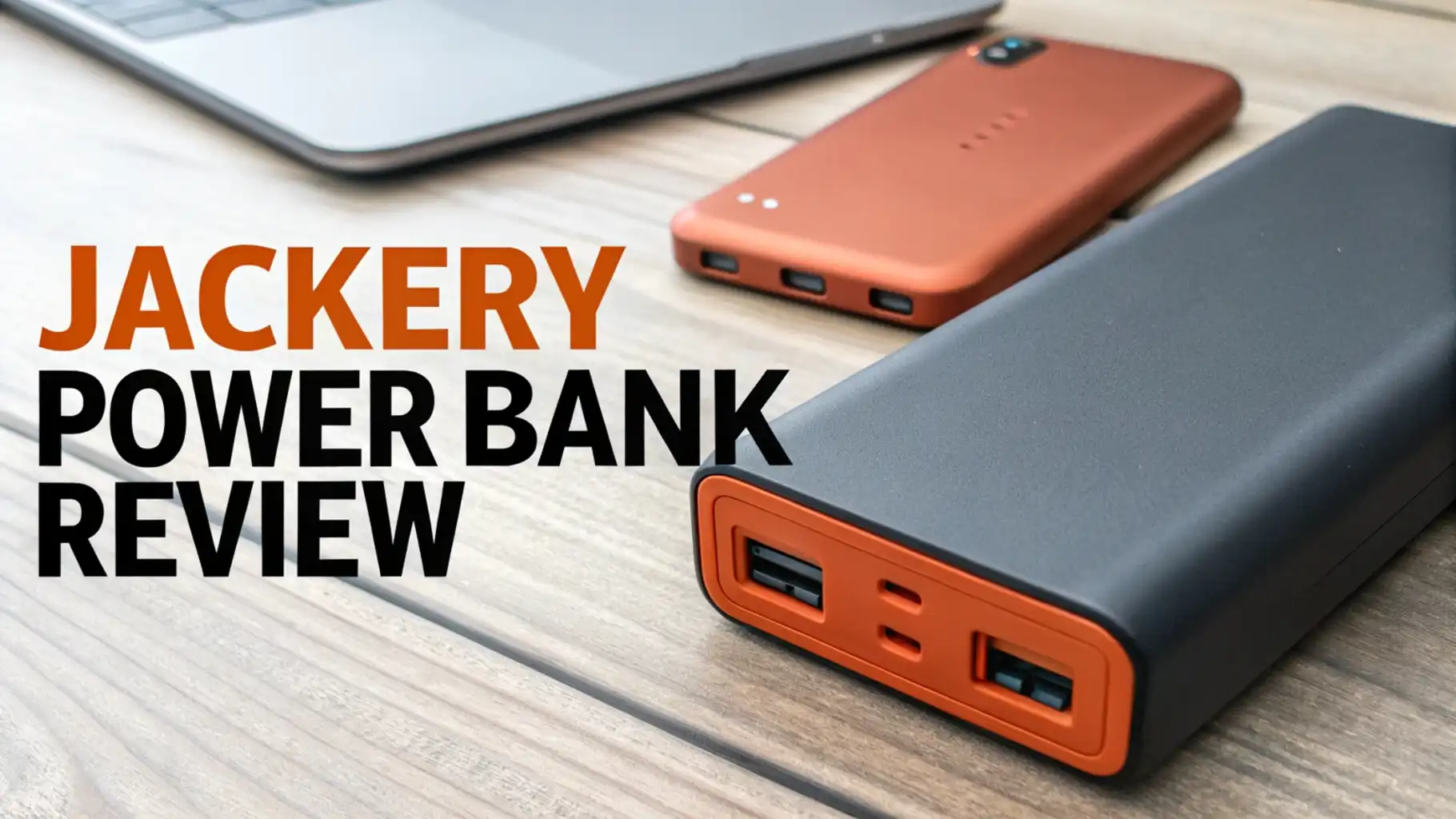
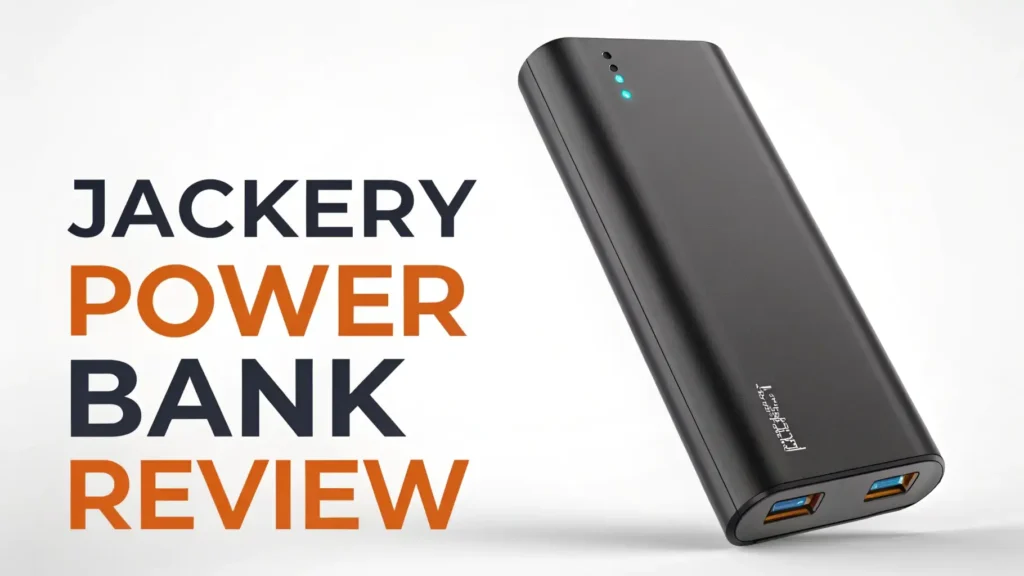
The Jackery Explorer 240D has a clean, modern design that feels premium in hand. The body is solid and sturdy, built with durable outer materials that can handle regular bumps and drops during travel and outdoor adventures. The orange and black color scheme is classic Jackery, making it easy to spot in a gear bag or tent.
One of the smartest design decisions Jackery made here is the integrated handle that doubles as a 140W USB-C fast-charging cable. You do not need to carry a separate laptop charging cable if you have this device. The handle connects directly and delivers full 140W charging speed. That kind of thoughtful engineering is rare even in premium products.
The unit is compact enough to fit in a large jacket pocket, though most users will carry it in a daypack. It sits flat and stable on any surface, and the port layout on the front is easy to use even in low light. The LED display clearly shows remaining battery percentage at all times.
Build quality feels solid and reliable. The Explorer 240D has been drop-tested and reviewed by dozens of tech publications and outdoor gear labs in 2026. No major durability issues have been reported in user reviews or editorial tests. At just 4.85 pounds, it is easy to carry all day without fatigue.
Top 3 Alternatives for the Jackery Power Bank


Battery Performance and Capacity
The 256Wh LiFePO4 battery inside the Explorer 240D is the heart of this product, and it does not disappoint. To put the capacity in perspective, here is what this power bank can do on a single full charge:
A standard smartphone with a 5,000mAh battery can be charged approximately 15 to 16 times. A 13-inch laptop with a 65Wh battery can be recharged 3 to 4 times. A drone battery, a camera battery, wireless earbuds, a GPS unit, and a smart watch can all be charged multiple times each without draining the 240D below 50%.
The LFP chemistry is a big deal here. Traditional lithium-ion batteries in consumer power banks degrade faster and carry a higher risk of overheating.
LiFePO4 cells are more thermally stable, safer in hot environments, and hold their capacity longer over hundreds of charge cycles. The Explorer 240D is rated for over 6,000 cycles, compared to the industry standard of around 500 to 1,000 cycles in a typical consumer power bank.
Real-world tests from outdoor reviewers confirm that the stated capacity is accurate. Users running phones, cameras, and laptops simultaneously in field conditions report consistent and reliable performance across weekend trips, multi-day hikes, and van life setups.
Charging Speed: How Fast Is It Really?
Charging speed is one area where the Jackery Explorer 240D genuinely impresses. Using AC-DC dual input, the unit charges from zero to 80% in approximately 60 minutes. A full 100% charge takes roughly 3 to 3.5 hours. That is significantly faster than most comparable power stations in this price range.
Solar charging is also supported. With a compatible Jackery SolarSaga panel (sold separately), you can top up the Explorer 240D using sunlight. The time depends on solar panel wattage and sunlight conditions, but a 100W panel can recharge the unit in around 3 to 5 hours in direct sunlight.
You can also charge the 240D via a car’s 12V outlet, which is useful during road trips. USB-C input is supported as well, giving you flexibility when AC power is not available.
On the output side, the 140W USB-C PD port is a standout feature. Laptops that support USB-C Power Delivery will charge at maximum speed. A MacBook Air, for example, charges faster from this port than from a standard wall adapter. The 100W USB-C port is strong enough to fast-charge a tablet, smartphone, or secondary laptop simultaneously.
Port Selection and Output Options
One of the things that makes the Jackery Explorer 240D stand out from a regular power bank is the port variety and output strength. Let me break down exactly what you get:
Port 1 is the flagship 140W USB-C PD port. This is your primary port for laptops, tablets, and any device that supports USB Power Delivery. It delivers true 140W output, which is enough for most modern notebooks.
Port 2 is a 100W USB-C port. This handles fast charging for smartphones, tablets, and lighter laptops. Two devices can run at high speed from this unit simultaneously.
Port 3 is a 15W USB-C port. This is ideal for smaller devices like earbuds, smartwatches, and wireless headphones.
Port 4 is a USB-A port. This is for standard-speed charging of older devices that use a USB-A cable.
There is no DC barrel port and no AC outlet on this device. That is a deliberate choice by Jackery to keep the unit compact and lightweight. If you only use modern USB-powered devices, you will never miss the AC outlet. The total simultaneous output across all four ports is up to 200W DC.
Who Should Buy the Jackery Explorer 240D?
The Jackery Explorer 240D is a good fit for specific kinds of users. Knowing who this product is made for helps you decide if it matches your lifestyle.
This product is great for:
Campers and hikers who carry phones, cameras, GPS devices, drones, and laptops on outdoor trips. The lightweight form factor and high capacity make it a natural fit.
Digital nomads who work from cafes, airports, and co-working spaces will love the 140W laptop charging capability. Van lifers and road trippers who rely on USB-powered devices daily will find the 240D to be a perfect daily driver. Travelers who want a compact backup for multi-day trips without heavy gear.
This product is not ideal for:
People who need to run AC appliances like coffee makers, electric fans, CPAP machines, or power tools. Users who want home backup power during outages should look at the Anker SOLIX C1000 or Bluetti Elite 30 V2 instead. Those who need to run 120V devices absolutely need an AC outlet, and the Explorer 240D does not have one.
The sweet spot for this product is clear: if your daily gear is USB-C and USB-A powered, the Explorer 240D covers everything you need in a portable, durable, and fast-charging package.
Real-World Use Cases for the Jackery Power Bank
Seeing specs on paper is one thing. Understanding how the Jackery Explorer 240D performs in the real world is another. Here are the most common use cases where this power bank earns its keep.
Weekend camping: Charge your phone, camera, GoPro, portable speaker, headlamp, and GPS tracker throughout a three-day trip without running dry. Users report easily managing all their USB-powered gear with 20 to 30% battery remaining after a full weekend.
Air travel and layovers: The compact size fits in a carry-on bag or backpack easily. Charge your laptop, phone, and earbuds in the terminal or during a long layover. Note: Check with your airline, as some restrict power banks above 100Wh in carry-on luggage.
Van life and road trips: Park your van, run your phone, laptop, and USB-C accessories all day from the Explorer 240D. Recharge it via solar or the car’s 12V outlet while you drive.
Emergency preparedness: Keep the Explorer 240D charged at home. During a power outage, it keeps your phone, tablet, and communication devices alive for days.
Content creation on location: Photographers and videographers can power their laptop, external hard drives, camera batteries, and lighting accessories from a single compact unit.
Pros and Cons of the Jackery Explorer 240D
Every product has strengths and weaknesses. Here is an honest breakdown:
Pros:
Long battery life thanks to LiFePO4 chemistry rated for 6,000+ cycles. High capacity of 256Wh from a unit that weighs under 5 pounds. Fast charging input brings the unit to 80% in just one hour.
Powerful USB-C output with 140W PD for laptops. Smart cable-handle design eliminates the need for a separate laptop cable. Durable build quality with consistent performance across all user reviews. Strong value at the $159 to $169 price point.
Cons:
No AC outlet, which limits compatibility with older or appliance-type devices. Not TSA-approved for carry-on luggage due to the 256Wh capacity exceeding the 100Wh limit. No wireless charging support. Solar panel sold separately. Slightly heavier than a standard power bank at 4.85 pounds.
Final Verdict
The Jackery Explorer 240D power bank earns a strong recommendation in 2026. It is compact, powerful, well-built, and priced fairly.
The LiFePO4 battery gives it exceptional longevity, the 140W USB-C port handles laptop charging at full speed, and the one-hour fast charging input means you are rarely stuck waiting. The cable-handle design is clever and genuinely useful.
If you use modern USB-powered devices and want the most portable high-capacity power bank available today, the Explorer 240D is the one to get. It earned its place at the top of the value segment for a good reason.
Frequently Asked Questions
Does the Jackery Explorer 240D have an AC outlet?
No. The Jackery Explorer 240D is a DC-only power station. It has three USB-C ports and one USB-A port but no traditional AC wall outlet. It delivers up to 200W of total DC output. If you need an AC outlet, consider the Bluetti Elite 30 V2 or Anker SOLIX C1000 Gen 2.
Can you take the Jackery Explorer 240D on a plane?
The Jackery Explorer 240D has a 256Wh capacity, which exceeds the 100Wh carry-on limit for most commercial airlines. You should check directly with your airline before flying. Many airlines allow batteries up to 160Wh with prior approval, but the 256Wh unit may be restricted on some carriers.
How long does it take to fully charge the Jackery Explorer 240D?
Using AC-DC dual input, the Explorer 240D charges from zero to 80% in approximately one hour. A full charge from zero to 100% takes around 3 to 3.5 hours. Solar charging time depends on panel wattage and sunlight availability.
How many times can the Jackery Explorer 240D charge a phone?
The 256Wh (80,000mAh) battery can charge a standard 5,000mAh smartphone approximately 15 to 16 times on a single full charge. Actual numbers vary slightly depending on the phone model and charging cable.
What devices can the Jackery Explorer 240D charge?
It can charge any device that uses USB-C or USB-A input. This includes smartphones, tablets, laptops, MacBooks, drones, cameras, GoPros, GPS units, smartwatches, wireless earbuds, portable speakers, handheld game consoles, and power banks. It cannot power devices that require an AC wall outlet.
Is the Jackery Explorer 240D good for camping?
Yes. It is one of the best power banks for camping in 2026. Its compact size, durable build, high capacity, and multiple USB ports make it ideal for keeping all your camp electronics charged throughout a multi-day outdoor trip.
How long does the Jackery Explorer 240D battery last over time?
The LiFePO4 battery inside the Explorer 240D is rated for over 6,000 charge cycles before dropping to 80% capacity. With regular weekly use, that translates to over a decade of reliable performance before any noticeable degradation.