
Honeywell Allergen Plus HEPA Air Purifier Review: Complete Guide
Do you wake up sneezing every morning? Does pet dander make your eyes water? You’re not alone in this struggle. Millions of people battle indoor air quality issues daily.
The good news is that the Honeywell Allergen Plus HEPA Air Purifier promises to transform your home into a sanctuary of clean, fresh air.
This powerful device has become a trusted companion for allergy sufferers, pet owners, and anyone who wants to breathe easier at home.
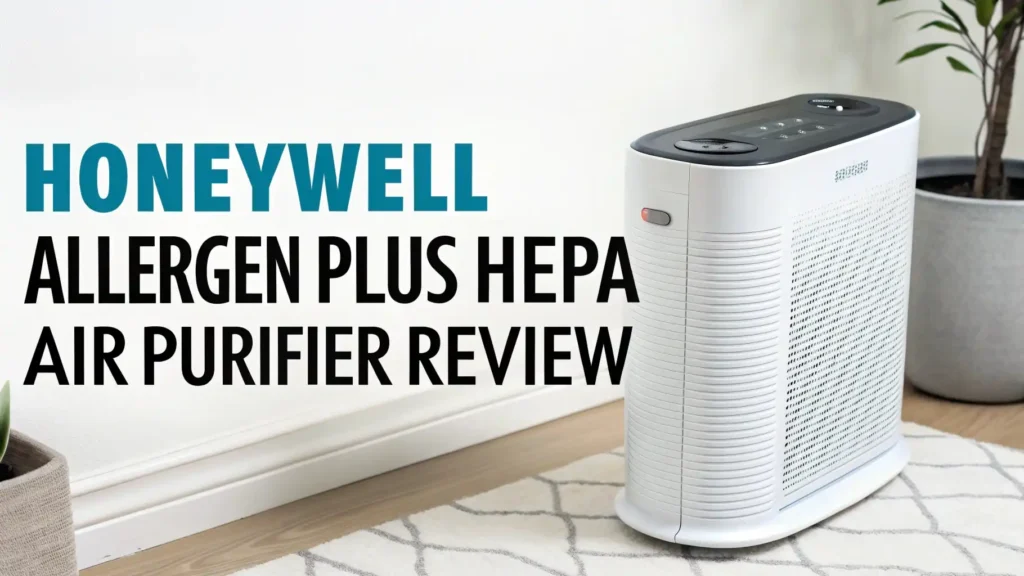
Key Takeaways
- True HEPA Filtration Power: The Honeywell Allergen Plus captures up to 99.97% of microscopic particles as small as 0.3 microns, including dust, pollen, pet dander, mold spores, and smoke particles that pass through the filter.
- Multiple Room Size Options: Available in various models for different spaces, from small rooms (110 sq ft) to extra-large rooms (2400 sq ft), ensuring you find the perfect fit for your specific needs.
- Advanced Carbon Pre-Filter: Features an activated carbon pre-filter that helps reduce unpleasant odors and volatile organic compounds (VOCs) from cooking, pets, and smoke before air reaches the main HEPA filter.
- Energy Efficient Operation: Most models are ENERGY STAR certified, meaning they clean your air effectively while keeping electricity costs low, making them budget-friendly for continuous use.
- User-Friendly Design: Comes with multiple fan speed settings, easy-to-read filter replacement indicators, and simple controls that anyone can operate without reading lengthy instruction manuals.

Understanding the Honeywell Allergen Plus HEPA Air Purifier
The Honeywell Allergen Plus HEPA Air Purifier represents a breakthrough in home air quality management. This device uses True HEPA filtration technology that meets strict standards set by the Department of Energy.
The purifier works by pulling air through multiple layers of filtration. First, the carbon pre-filter catches larger particles and absorbs odors. Then, the True HEPA filter traps microscopic allergens. Finally, clean air circulates back into your room.
The system is engineered for efficiency and designed to handle real-world air quality challenges. Many models feature automatic air quality sensors that adjust fan speeds based on detected pollution levels.
This smart technology ensures your air stays clean without constant manual adjustments. The sleek design fits seamlessly into modern homes without looking like medical equipment.
How True HEPA Technology Works
True HEPA filtration is not just marketing language. It’s a scientifically proven standard that requires filters to capture 99.97% of particles at 0.3 microns. This size is actually the hardest to filter, which means the filter performs even better at larger and smaller particle sizes.
The HEPA filter uses a dense web of fibers arranged randomly. As air passes through, particles get trapped through several mechanisms including interception, impaction, and diffusion.
The carbon pre-filter adds another layer of protection by using activated carbon’s porous structure to absorb gases and odors. This two-stage approach ensures both particulate matter and gaseous pollutants are removed.
The technology has been tested and certified by independent laboratories. Medical-grade filtration in your home means you’re breathing air similar to what you’d find in hospitals and clean rooms.
Room Coverage and Performance Ratings
Choosing the right size matters tremendously for optimal performance. The Honeywell Allergen Plus comes in several models designed for specific room sizes.
The HPA5300B model covers extra-large rooms up to 2400 square feet, making it perfect for open-concept living areas. The HPA200 model handles large rooms up to 310 square feet with 4.8 air changes per hour.
For medium rooms around 155-190 square feet, the HPA5100W provides excellent coverage. Smaller bedrooms and offices benefit from compact models covering 110-170 square feet.
The air changes per hour (ACH) rating tells you how many times the purifier filters all the air in the room. Higher ACH means faster purification.
Most Honeywell models provide 4.8 to 5 air changes per hour in their rated room size. This means every drop of air in your room passes through the filter almost five times each hour, ensuring consistent cleanliness.
Top 3 Alternatives for Honeywell Allergen Plus HEPA Air Purifier


Filter System and Maintenance Requirements
The multi-stage filtration system is the heart of this air purifier. The activated carbon pre-filter forms the first line of defense. This washable or replaceable filter catches hair, lint, and larger particles while absorbing cooking odors, pet smells, and smoke.
Behind it sits the True HEPA filter, which does the heavy lifting of capturing microscopic allergens. Honeywell recommends replacing the pre-filter every 3 months for optimal performance. The HEPA filter typically lasts 12 months with normal use.
The purifier features convenient filter replacement indicators that light up when it’s time for maintenance. Replacing filters is remarkably simple and requires no tools.
Just open the unit, slide out the old filter, and slide in the new one. Using genuine Honeywell replacement filters ensures you maintain the certified performance levels. Generic filters might fit but may not provide the same filtration efficiency.
Noise Levels and Fan Speed Options
Noise is a critical consideration for bedroom use and quiet spaces. The Honeywell Allergen Plus offers multiple fan speed settings to balance cleaning power with noise levels.
On the lowest setting, most models operate at a whisper-quiet 17-30 decibels, similar to rustling leaves. This makes them perfect for nighttime use without disturbing sleep.
Medium settings produce a gentle white noise around 40-50 decibels, comparable to a quiet library. The highest turbo setting can reach 60-70 decibels, similar to normal conversation volume. While louder, this setting quickly clears heavily polluted air.
Many users find the white noise soothing and helpful for sleep. The electronic controls are designed to be silent with no clicking or beeping sounds that might startle you awake.
Some advanced models include automatic mode that adjusts fan speed based on air quality sensors, maintaining optimal cleaning with minimal noise.
Energy Consumption and Operating Costs
Running an air purifier continuously might seem expensive, but Honeywell’s ENERGY STAR certification ensures reasonable electricity costs. Most models consume between 40-120 watts depending on fan speed settings.
On the lowest setting, you’re using less electricity than a standard light bulb. Even running 24/7 on medium speed, the annual electricity cost typically ranges from $20 to $50 depending on your local rates.
This minimal cost provides constant air cleaning that protects your health year-round. The true ongoing cost comes from replacement filters. Genuine HEPA filters cost approximately $40-60 each, and carbon pre-filters run $15-25.
With annual HEPA replacement and quarterly pre-filter changes, expect $100-150 yearly in filter costs. This investment in clean air is modest compared to allergy medications, doctor visits, and lost productivity from poor indoor air quality.
Design and Build Quality
Honeywell has refined the design through years of customer feedback. The units feature durable plastic construction that withstands daily use without cracking or yellowing. The tower design saves floor space while maximizing air intake area.
Control panels are intuitive with clearly labeled buttons and indicator lights. Most models come in neutral black or white colors that blend with any décor. The sturdy base prevents tipping, important for homes with pets or children.
Air intake grills are strategically placed for maximum efficiency. The compact footprint means you can tuck the purifier into corners or against walls without blocking walkways. Build quality feels solid, not cheap or flimsy.
Many units include convenient carrying handles for easy room-to-room transport. The professional appearance looks appropriate in offices, bedrooms, living rooms, or commercial spaces.
Air Quality Sensor Technology
Advanced Honeywell models include intelligent air quality sensors that continuously monitor your indoor environment. These sensors detect particles and pollutants in real-time. The sensor data drives the automatic mode, which adjusts fan speed based on current air quality.
When the sensor detects high pollution levels (from cooking, cleaning, or opening windows), the purifier automatically increases to higher speeds. Once air quality improves, it reduces to quieter, more energy-efficient settings.
Some models feature visual air quality indicators with color-coded lights. Blue indicates good air quality, orange signals moderate pollution, and red warns of poor air quality.
This feedback helps you understand your indoor environment and identify pollution sources. The sensors provide peace of mind that your air is being actively monitored and cleaned. No more guessing whether your air purifier is actually doing its job.
Real User Experiences and Performance
Customer reviews provide valuable insights into real-world performance. Users consistently praise the noticeable reduction in allergy symptoms within days of use. Many report fewer morning sneezes, clearer sinuses, and better sleep quality.
Pet owners love how the purifier eliminates pet odors and reduces dander that triggers allergies. Parents appreciate keeping nurseries and children’s rooms cleaner. The ability to reduce cooking odors impresses users who thought lingering smells were inevitable.
Wildfire season testimonials highlight how the purifier helped families breathe easier despite poor outdoor air quality. Some users mention the filter replacement costs, though most agree the health benefits justify the expense.
The quiet operation surprises many who expected loud, disruptive noise. A few users wish for smart home integration or WiFi connectivity in more models. Overall satisfaction remains extremely high with most reviewers recommending Honeywell to friends and family.
Ideal Use Cases and Applications
The Honeywell Allergen Plus excels in multiple scenarios. Allergy and asthma sufferers find tremendous relief from reduced exposure to triggers. Bedrooms benefit most since we spend roughly one-third of our lives sleeping and breathing bedroom air.
Pet owners appreciate the reduction in dander and odors that come with furry companions. Home offices gain cleaner air for better concentration and productivity. Nurseries and children’s rooms provide developing lungs with cleaner air.
People sensitive to cigarette or cooking smoke find the carbon filter particularly helpful. During wildfire season, the purifier provides a refuge from outdoor smoke infiltration. Individuals with compromised immune systems benefit from reduced exposure to airborne bacteria and viruses.
The purifier also helps combat mold spores in damp climates or basements. Anyone wanting to reduce household dust and the time spent cleaning surfaces will appreciate the air filtration benefits.
Setup and Installation Process
Getting started with your Honeywell Allergen Plus is remarkably straightforward. The purifier arrives with minimal assembly required. Simply remove it from the box, remove any protective packaging, and plug it in.
Most models come with filters pre-installed, though some require you to insert them before first use. The instruction manual provides clear, illustrated steps. Choose a location with adequate space around the unit for proper air circulation.
Avoid placing directly against walls or in corners that might restrict airflow. Position the unit away from curtains or furniture that could block air intake grills. Once positioned, power on the unit and select your desired fan speed or automatic mode.
The first few hours might produce a slight new-product smell as the filters settle. This quickly dissipates. No professional installation or special tools are needed. Within five minutes, you’ll have cleaner air circulating through your space.
Comparing Different Honeywell Models
Understanding the differences between models helps you choose wisely. The HPA5300B Insight Series represents the premium option with advanced air quality sensors, automatic mode, and coverage up to 2400 square feet.
The HPA200 offers excellent value for large rooms up to 310 square feet without sensor technology. The HPA5100W provides a middle ground for medium rooms with good features at a moderate price point.
The HPA060 tower model suits small spaces with a space-saving vertical design. Key differences include room coverage area, presence of air quality sensors, fan speed options, and aesthetic design.
Higher-end models typically include digital displays showing air quality readings. Budget models use mechanical controls instead of electronic touch panels.
All models use the same True HEPA filtration technology, so cleaning performance remains consistent. Choose based on your room size first, then consider which additional features matter most for your lifestyle.
Warranty and Customer Support
Honeywell backs their air purifiers with solid warranty coverage. Most models include a 5-year limited warranty covering defects in materials and workmanship. This extended warranty demonstrates confidence in product reliability and durability.
If your unit develops issues during the warranty period, Honeywell provides repair or replacement options. Customer support is accessible through multiple channels including phone, email, and online chat.
The Honeywell website offers extensive support resources including user manuals, troubleshooting guides, and filter replacement videos. Replacement filters are widely available through Amazon, big-box retailers, and the Honeywell store.
The company’s long history in air quality products means they understand customer needs and provide responsive service.
Many users report positive experiences with warranty claims and technical support. This reliability and support make Honeywell a trusted brand in the air purification market.
Frequently Asked Questions
How often do I need to replace the filters in my Honeywell Allergen Plus?
The carbon pre-filter should be replaced every 3 months for optimal odor removal and to protect the HEPA filter. The True HEPA filter needs replacement annually, or every 12 months. Your usage intensity and air quality affect these timelines. Homes with multiple pets, smokers, or high dust levels might need more frequent changes. The built-in filter indicators light up when replacement time approaches. Following the recommended schedule ensures your purifier maintains its 99.97% filtration efficiency.
Can the Honeywell air purifier remove cigarette smoke and cooking odors?
Yes, the activated carbon pre-filter specifically targets smoke particles and odors. While the HEPA filter captures smoke particulates, the carbon filter absorbs gaseous pollutants and smell molecules. Many users report significant reduction in lingering cooking smells and tobacco odors. For best results in heavily smoky environments, consider replacing the carbon pre-filter more frequently than the standard 3-month recommendation. The combination filtration approach handles both visible smoke and invisible odor molecules.
Is the Honeywell Allergen Plus loud enough to disturb sleep?
Not on the lower settings. The lowest fan speed operates at whisper-quiet 17-30 decibels, quieter than a whisper. Many users actually find the gentle white noise helpful for sleep. The medium setting produces soft ambient sound comparable to a quiet fan. Only the turbo setting might be too loud for sleep, but you rarely need maximum speed overnight. Many people run their purifiers continuously in bedrooms without any sleep disruption.
Will this air purifier help with pet allergies?
Absolutely. Pet dander is one of the most common allergens the Honeywell Allergen Plus targets. The True HEPA filter captures 99.97% of pet dander particles, while the carbon pre-filter helps with pet odors. Users with cat and dog allergies report noticeable symptom reduction within days. For best results, place the purifier in rooms where pets spend the most time. Regular vacuuming combined with air purification provides comprehensive pet allergen control.
How much does it cost to run the Honeywell air purifier 24 hours daily?
The energy cost is surprisingly low thanks to ENERGY STAR certification. Running continuously on medium speed typically costs $20-50 annually depending on your local electricity rates. This breaks down to roughly $2-4 per month, less than a single coffee shop visit. The health benefits of clean air far outweigh this minimal operating cost. You’re essentially getting hospital-grade air filtration for pennies per day.
Can I use generic replacement filters instead of Honeywell brand?
While generic filters might fit physically, Honeywell strongly recommends using genuine replacement filters. Genuine filters are tested and certified to maintain the 99.97% filtration efficiency. Generic alternatives might save money upfront but often provide inferior filtration, potentially voiding your warranty. The peace of mind knowing your air purifier performs as designed is worth the modest additional cost for authentic filters.