Ecoself Air Purifier Review: Guide to Cleaner Air at Home
Breathing clean air at home matters more than you might think. Your indoor air quality affects your health every single day.
The Ecoself air purifier promises to tackle this problem with advanced filtration technology and smart features. But does it really work?
This review explores everything you need to know about Ecoself air purifiers. You will discover what makes these devices stand out in a crowded market.

Key Takeaways:
- Coverage and Power: Ecoself purifiers can clean spaces from 1,295 square feet up to 2,400 square feet depending on the model. The 2X-Power Filtration system cycles air twice per hour in large rooms. This feature delivers faster cleaning than many competitors in the same price range.
- HEPA Filtration Excellence: All Ecoself models use True HEPA filters that capture 99.97% of airborne particles as small as 0.3 microns. This includes dust, pollen, pet dander, smoke particles, and mold spores. The activated carbon layer handles odors and volatile organic compounds effectively.
- Smart Air Quality Monitoring: Built-in PM2.5 sensors track air quality in real time. The color-coded display shows current air quality levels at a glance. Smart mode automatically adjusts fan speed based on detected pollution levels. You never have to guess whether your air is clean.
- Whisper Quiet Operation: Sleep mode runs at just 20 to 22 decibels depending on the model. This noise level compares to a soft whisper or rustling leaves. You can run it all night without disturbing your sleep or concentration during work hours.
- Budget Friendly Pricing: Most Ecoself models cost between $69.99 and $99.99 on Amazon. This pricing sits well below premium brands while offering similar features. Filter replacements last approximately six months and remain affordable compared to competitors.

How Ecoself Air Purifiers Work
True HEPA filtration forms the heart of every Ecoself air purifier. The system uses a three-stage filtration process that captures different types of pollutants. Understanding how this works helps you appreciate what you are getting.
The pre-filter catches large particles first. This includes visible dust, pet hair, and lint. Capturing these big particles protects the more delicate HEPA filter. The pre-filter extends the life of your main filter. You can vacuum or wash it to maintain performance between replacements.
Next comes the True HEPA filter. This layer uses densely packed fibers to trap microscopic particles. The HEPA standard requires capturing 99.97% of particles as small as 0.3 microns. This size includes most allergens, bacteria, and fine dust particles. Pollen, mold spores, and pet dander cannot pass through.
The activated carbon filter handles gases and odors. Cooking smells, smoke, and chemical vapors stick to the carbon surface. This layer also reduces volatile organic compounds that off-gas from furniture, paint, and cleaning products. The combination of HEPA and carbon filtration addresses both particles and gases.
Top 3 Alternatives for Ecoself Air Purifier


Ecoself HAP602 Model: Features and Performance
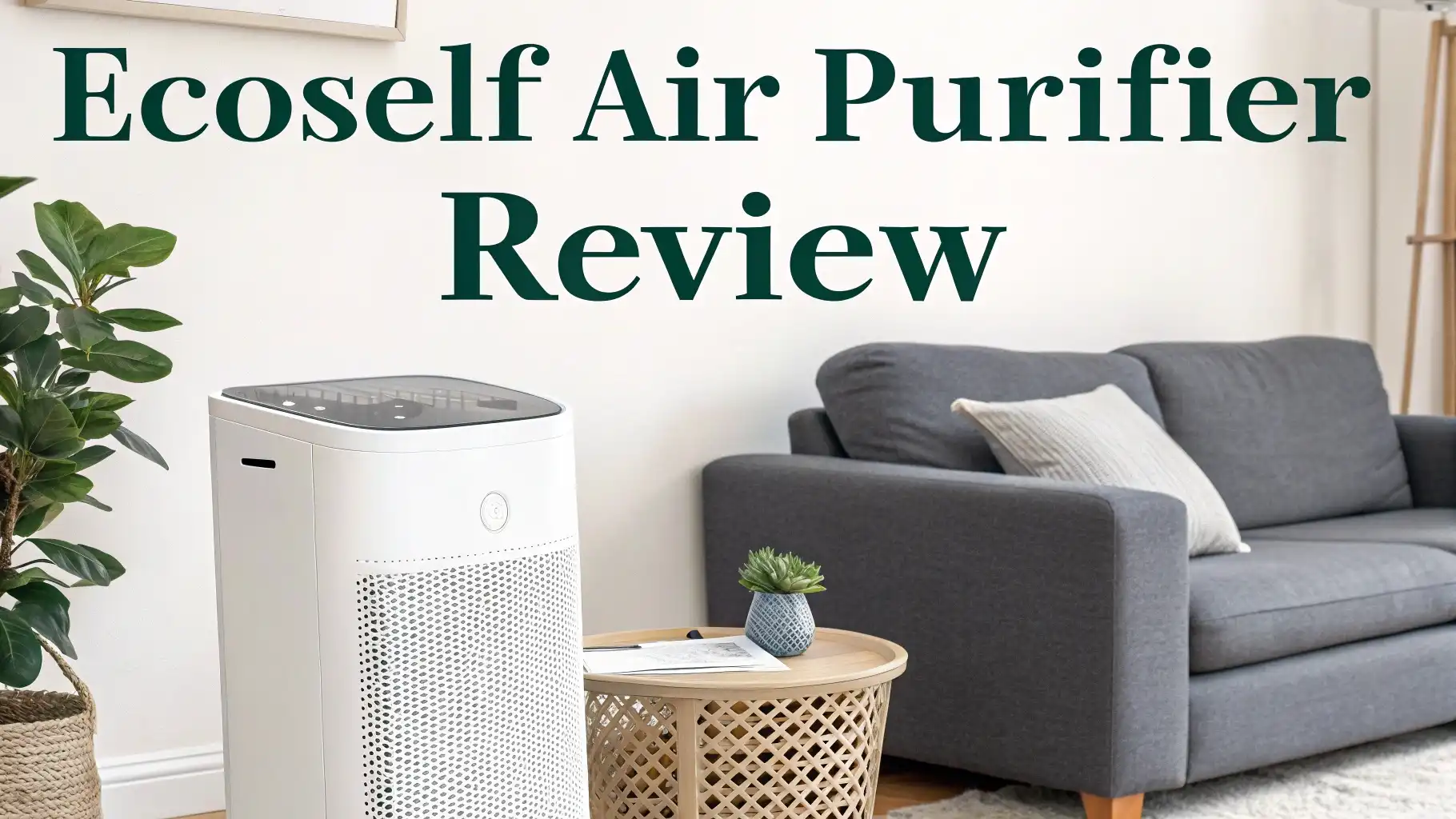
The HAP602 represents Ecoself’s most popular model. This unit delivers impressive cleaning power for large rooms up to 2,400 square feet. The white and black color options match different home decor styles.
The built-in PM2.5 display gives you constant feedback about your air quality. No more guessing whether the purifier actually works. The screen shows real-time particle concentration. This visual confirmation reassures you that your investment pays off.
Sleep mode operates at just 20 decibels. This noise level barely registers above complete silence. You can place the unit in your bedroom without worrying about sleep disruption. The display lights dim automatically in sleep mode. No bright LEDs will disturb your rest.
The HAP602 uses a circular 360-degree intake design. Air enters from all sides of the unit. This feature increases efficiency compared to single-side intake models. More air passes through the filter in less time. The 360-degree outlet spreads clean air throughout the room evenly.
Ecoself HAP603: Enhanced Features for Demanding Users

The HAP603 builds on the HAP602 foundation with several upgrades. This model targets buyers who want additional convenience features without breaking the bank. The price typically stays under $70 during sales.
The aromatherapy function sets this model apart. A small compartment holds essential oil pads. As air flows through the unit, it picks up pleasant scents. You can enjoy lavender, eucalyptus, or any oil you prefer. This feature transforms your air purifier into a subtle diffuser.
Smart mode works more aggressively on the HAP603. The automatic adjustments respond faster to air quality changes. When you cook or someone walks in with outdoor allergens, the purifier ramps up immediately. This responsive behavior keeps air quality more consistent throughout the day.
The HAP603 operates slightly quieter than the HAP602. Sleep mode hits 22 decibels instead of 20, but most people cannot detect this tiny difference. Both units qualify as extremely quiet. The sound quality also matters. The HAP603 produces a smooth white noise instead of any annoying whines or rattles.
Ecoself HAP603WF: Smart WiFi Connected Air Purification
No products found.
The HAP603WF adds WiFi connectivity for tech-savvy homeowners. This model costs around $99.99 but offers remote control through a smartphone app. You can monitor and adjust your air purifier from anywhere.
The companion app works with both iOS and Android devices. Setup takes just a few minutes. Scan a QR code, connect to your WiFi network, and you are ready. The app interface displays real-time air quality data from your home. You can check conditions while at work or traveling.
Remote control functionality includes all major features. Adjust fan speed, switch modes, set schedules, and check filter life from your phone. Forgot to turn on the purifier before leaving? Start it remotely. Want the air extra clean before you arrive home? Boost power from your car.
Voice control integration works with Amazon Alexa and Google Assistant. Simple voice commands control the purifier hands-free. “Alexa, turn on the bedroom air purifier” activates the unit. “Hey Google, set air purifier to sleep mode” adjusts settings without reaching for buttons.
Room Coverage: Choosing the Right Size
Getting the coverage area right matters tremendously. A purifier that is too small for your space will run constantly without achieving clean air. An oversized unit wastes money and energy.
Ecoself rates their purifiers based on square footage with 2X air changes per hour. This means the HAP603 can clean a 1,295 square foot room twice in 60 minutes. More frequent air changes produce cleaner results. If you use the same unit in a 600 square foot bedroom, you get about four air changes per hour.
Measure your room dimensions to calculate square footage. Multiply length times width. A 20 by 15 foot living room equals 300 square feet. A large 30 by 40 foot basement equals 1,200 square feet. Open floor plans count as one large space. Add up all connected areas without doors.
Ceiling height affects air volume but most manufacturers assume standard 8 to 10 foot ceilings. Cathedral ceilings or loft spaces contain more air. Consider buying a larger capacity purifier for these situations. The unit needs to move more cubic feet of air.
Filter Replacement: Cost and Maintenance
Regular filter replacement keeps your Ecoself purifier working effectively. Dirty filters reduce airflow and cleaning power dramatically. Understanding replacement costs helps you budget for true ownership expenses.
Ecoself filters typically last six months with normal use. Normal use means running the purifier 8 to 12 hours daily in average home conditions. Heavy use or high pollution areas shorten filter life. Light use in clean environments extends it slightly.
Replacement filters cost approximately $30 to $40 depending on the model. You can find compatible filters on Amazon from both Ecoself and third-party manufacturers. Some users report success with generic HEPA filters that fit the dimensions. Always verify compatibility before purchasing alternatives.
The filter replacement indicator light eliminates guesswork. When the light activates, order your replacement filter. You can often use the old filter for another week or two while the new one ships. Do not ignore the indicator for months. Performance degrades significantly with clogged filters.
Noise Levels and Sleep Mode Performance
Noise can make or break your air purifier experience. Even the most effective filter becomes useless if the noise drives you crazy. Ecoself prioritizes quiet operation across all models.
The 20 to 22 decibel sleep mode compares to a whisper or rustling leaves. Most people cannot hear this noise level if any other sounds exist. A ticking clock or outside traffic easily masks the purifier. Only in completely silent rooms late at night might you detect a faint whoosh.
Higher fan speeds naturally produce more noise. Medium settings reach about 40 to 45 decibels. This level compares to a quiet library or soft background music. You can hold normal conversations without raising your voice. The sound quality matters as much as volume. Ecoself units produce smooth white noise rather than irritating high-pitched whines.
Maximum speed hits around 50 to 55 decibels depending on the model. This noise level resembles a normal conversation or quiet office environment. The loudest setting proves useful when you need rapid air cleaning. Run it at high speed for an hour after cooking. Then drop to low or sleep mode.
Air Quality Monitoring and Smart Features
Real-time air quality monitoring transforms how you use an air purifier. Instead of blindly running the unit, you see actual performance data. This feedback builds confidence that your money produces results.
The PM2.5 sensor detects particles smaller than 2.5 microns. These tiny particles cause the most health problems. They bypass your nose and throat defenses. PM2.5 particles penetrate deep into lungs and even enter your bloodstream. Tracking these particles matters more than visible dust.
The display shows particle concentration in micrograms per cubic meter. Lower numbers mean cleaner air. Generally, readings below 12 indicate good air quality. Numbers from 12 to 35 suggest moderate levels. Above 35 signals unhealthy air that needs immediate attention.
Health Benefits of Using Ecoself Air Purifiers
Clean air directly impacts your health and comfort. The benefits extend beyond just fresher smelling rooms. Medical research increasingly supports air purification for various health concerns.
Allergy relief ranks as the most common benefit users report. The HEPA filter captures pollen, dust mites, mold spores, and pet dander. These allergens trigger sneezing, congestion, itchy eyes, and breathing difficulty. Removing them from your air reduces symptom severity and frequency.
Recent studies show HEPA air purifiers can lower blood pressure in people with elevated readings. Research published in JACC found significant systolic blood pressure reductions after just one month of purifier use. The effect appears related to removing fine particles that stress your cardiovascular system.
Asthma symptoms often improve with cleaner air. Airborne triggers get filtered out before reaching your lungs. Users report fewer asthma attacks and reduced need for rescue inhalers. Children with asthma particularly benefit from bedroom air purifiers running during sleep.
Comparing Ecoself to Premium Brand Air Purifiers
Premium air purifier brands charge two to five times more than Ecoself. Do you get proportionally better performance? The answer surprises many shoppers. Diminishing returns apply to air purifier pricing.
Brands like Dyson, Blueair, and IQAir command premium prices. Their units cost $300 to $800 or more. Marketing emphasizes design, brand reputation, and minor technological differences. The core cleaning technology remains similar. HEPA filters work the same regardless of brand.
Dyson air purifiers feature distinctive bladeless fan designs. The appearance wins design awards. Performance tests show cleaning effectiveness comparable to much cheaper units. You pay heavily for the Dyson name and unique look. Functionality does not justify the massive price gap.
Energy Efficiency and Operating Costs
Running an air purifier 24/7 raises concerns about electricity costs. Understanding actual consumption helps you budget accurately. Energy efficiency varies significantly between brands and models.
Ecoself purifiers use approximately 30 to 50 watts depending on fan speed. Sleep mode consumes closer to 15 to 20 watts. Medium settings hit 30 to 35 watts. Maximum power draws 45 to 50 watts. These numbers compare favorably to premium alternatives.
Calculate annual electricity costs with simple math. Multiply wattage by hours used, then multiply by days per year. Divide by 1,000 to convert to kilowatt-hours. Multiply by your local electricity rate. A 35-watt average running 24/7 equals about 307 kilowatt-hours yearly.
If your electricity costs 12 cents per kilowatt-hour, annual operation costs approximately $37. At 15 cents per kilowatt-hour, you pay about $46 yearly. These modest amounts make continuous operation affordable. Your air stays clean without guilt about energy waste.
User Reviews: What Real Customers Say
Real customer experiences provide valuable insights beyond marketing claims. Thousands of Ecoself users have shared detailed reviews on Amazon and other platforms. Common themes emerge from this feedback.
Positive reviews consistently praise the strong suction and airflow. Many customers report visible dust reduction within days of operation. Furniture stays cleaner longer. Less dust accumulation on ceiling fans becomes noticeable. These concrete results build confidence in the product.
Allergy sufferers report significant symptom improvement. Reduced sneezing, fewer congested mornings, and less eye irritation appear frequently in reviews. Users with pet allergies particularly appreciate the results. Several reviews mention reducing or eliminating daily allergy medication after starting Ecoself purifiers.
The quiet operation impresses buyers repeatedly. Reviews mention running the unit all night without sleep disruption. Parents appreciate placing purifiers in children’s rooms. Light sleepers who struggle with noise find sleep mode acceptable. The sound quality gets described as smooth white noise rather than annoying whirring.
Best Rooms and Situations for Ecoself Purifiers
Certain rooms and situations benefit most from air purification. Understanding these optimal applications helps you decide where to place your Ecoself unit.
Bedrooms rank as the top priority for most people. You spend six to eight hours sleeping each night. Clean air during sleep supports health and rest quality. Place a purifier in each bedroom if budget allows. Run it continuously in sleep mode throughout the night.
Living rooms and family rooms see heavy use and multiple pollution sources. Cooking odors drift in from kitchens. People track in outdoor allergens. Pets spend time on furniture. Dust from foot traffic circulates constantly. A powerful purifier in this central space benefits everyone.
Home offices need clean air for concentration and productivity. Poor air quality affects cognitive function according to research. Brain fog and fatigue increase in poorly ventilated spaces. A quiet purifier maintains alertness during long work sessions. The white noise may help mask distracting household sounds.
Frequently Asked Questions
How often should I run my Ecoself air purifier?
Run your Ecoself purifier continuously for best results. The unit uses minimal electricity even at full-time operation. Continuous use maintains consistently clean air rather than playing catch-up. Sleep mode provides quiet operation during rest periods. You can reduce runtime when away from home for extended periods.
Can Ecoself purifiers remove viruses from the air?
HEPA filters capture particles down to 0.3 microns with 99.97% efficiency. Many viruses are smaller than this size. However, viruses typically travel attached to larger respiratory droplets or dust particles. The HEPA filter traps these carrier particles effectively. Studies show air purifiers reduce airborne virus concentration in rooms.
Do I need separate purifiers for each room?
Air purifiers clean the space they occupy. Air does not circulate well between closed rooms. Separate units for different rooms provide better overall coverage. You can move one unit between rooms if needed. However, this approach means some rooms remain unfiltered at any given time.
How long do Ecoself filters really last?
Ecoself rates filters for approximately six months with normal use. Actual lifespan depends on your air quality and usage patterns. Very dusty environments or running at maximum speed constantly shortens filter life. Clean homes with occasional use extend it beyond six months. The filter indicator provides general guidance but does not measure actual filter condition.
Will an Ecoself purifier eliminate all dust in my home?
Air purifiers reduce airborne dust significantly but do not eliminate all dust. Dust constantly enters homes through doors, windows, and on clothing. Surfaces still accumulate dust over time. However, you will notice less frequent dusting needed. Furniture stays cleaner longer. Visible dust in sunbeams decreases noticeably.
Can I wash and reuse Ecoself filters?
Do not wash or attempt to clean the HEPA filter. The dense fiber structure that captures tiny particles gets damaged by washing. Water disrupts the electrostatic charge that helps trap particles. Vacuuming might remove surface dust but does not restore full performance. Replace HEPA filters on schedule.