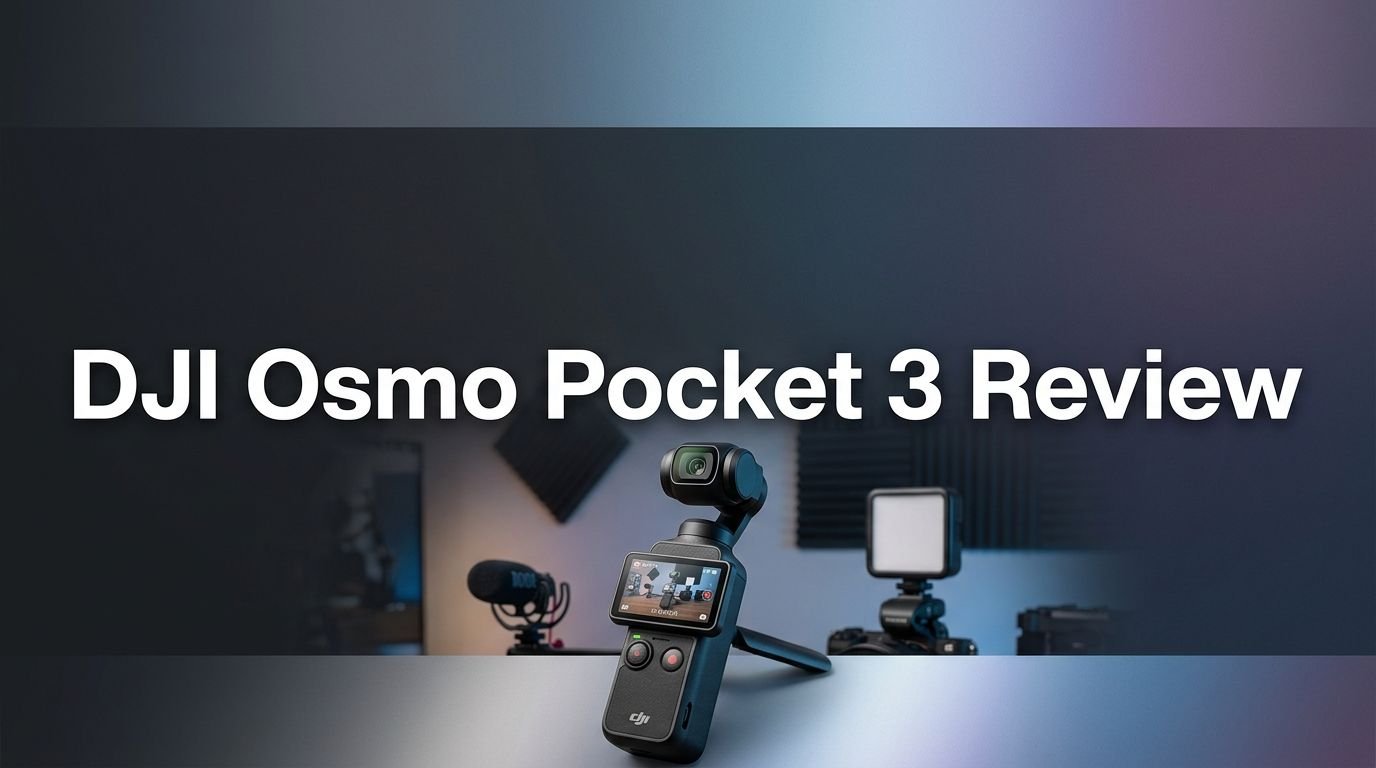
DJI Osmo Pocket 3 Review 2026: Is This Worth Buying?
The DJI Osmo Pocket 3 hit the market back in late 2023. It quickly became a favorite among vloggers, travel creators, and content professionals.
But does it still hold up in 2026? With new competitors like the Xtra Muse and the Insta360 Ace Pro 2 entering the scene, you need honest answers before spending your money.
This review covers everything. We break down video quality, battery life, gimbal performance, audio features, and real world usability. We also compare the Pocket 3 to its closest rivals.
Key Takeaways:
- The 1 inch CMOS sensor delivers sharp 4K video at up to 120fps, giving you slow motion footage that rivals cameras twice its price. Colors look rich and natural in most lighting conditions.
- Three axis gimbal stabilization keeps your shots smooth while walking, running, or even lightly jogging. This is a major advantage over smartphones that rely on electronic stabilization alone.
- The 2 inch rotatable OLED touchscreen makes switching between landscape and portrait mode fast and easy. It is responsive and bright enough to use in direct sunlight at 700 nits.
- Battery life lasts up to 166 minutes at 1080p/24fps. Fast charging reaches 80% in just 16 minutes with a compatible PD charger. This is great for all day shoots.
- 10 bit D Log M and HLG color modes give professionals extra room for color grading. Casual users can also enjoy vivid colors straight out of the camera with standard profiles.
- The compact 179 gram body fits in a coat pocket. You can carry it anywhere without the bulk of larger cameras. However, ND filters are add on accessories, and the built in storage is absent, so you need a microSD card.

DJI Osmo Pocket 3: Design and Build Quality
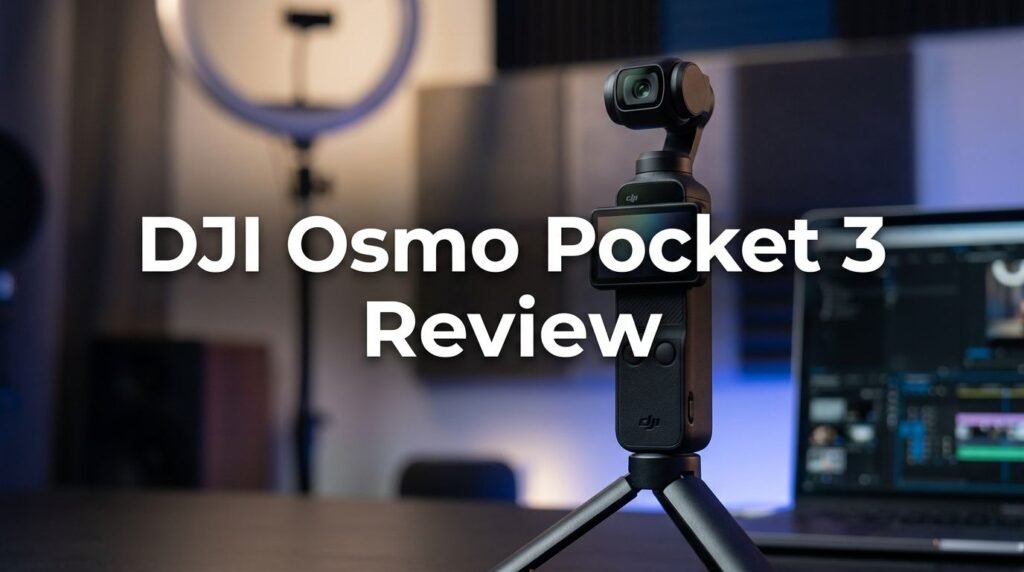
The DJI Osmo Pocket 3 weighs just 179 grams. It measures 139.7 x 42.2 x 33.5 mm. You can hold it comfortably in one hand for extended periods. The body uses a mix of plastic and metal that feels solid without being heavy.
The 2 inch OLED rotatable touchscreen is one of the best features of this design. It rotates smoothly, letting you switch between horizontal and vertical shooting in a second. The screen resolution sits at 556 x 314 pixels with 700 nits of brightness. You can frame your shots clearly even under bright sunlight.
DJI added a clever gimbal lock feature. The three axis gimbal locks itself when you power off the camera. This protects the delicate motors during transport. You do not need a separate case just to keep the gimbal safe, though DJI includes a protective cover.
The handle has a textured grip that prevents slipping. A single button on the front serves as the shutter and record trigger. A second button on the side handles power and mode switching. The interface is minimal and easy to learn within minutes.
One small drawback is the lack of built in storage. You must use a microSD card up to 1 TB for recording. This is not a dealbreaker, but it means you need to buy a card separately if one is not included in your combo.
Camera Performance and Video Quality
The heart of this camera is its 1 inch CMOS sensor. This sensor is significantly larger than what you find in most compact gimbal cameras. It captures more light, produces less noise, and delivers better dynamic range.
Video recording tops out at 4K (3840 x 2160) at 60fps in normal mode. For slow motion, you get 4K at 120fps and 1080p at 240fps. The slow motion footage looks remarkably smooth and cinematic. Many reviewers agree this is where the Pocket 3 truly shines.
The lens has a 20mm equivalent focal length with an f/2.0 aperture. This wide angle view captures more of your scene. The f/2.0 aperture performs well in low light and produces a natural background blur for close up subjects.
Color science from DJI remains strong in 2026. The standard color profile produces vibrant and accurate colors. For professionals, 10 bit D Log M and HLG modes unlock greater dynamic range. D Log M gives you flat footage ideal for color grading in post production.
The max video bitrate is 130 Mbps. This ensures your footage retains fine detail and minimal compression artifacts. The camera records in MP4 format using either H.264 or HEVC codecs. HEVC is the better choice for saving storage space while maintaining quality.
Digital zoom is available at 2x in 4K, 3x in 2.7K, and 4x in 1080p. It works in a pinch, but you will notice quality loss at higher zoom levels.
Three Axis Gimbal Stabilization
The mechanical three axis gimbal is the defining feature of the DJI Osmo Pocket 3. It controls pan, tilt, and roll movements. The pan range extends from negative 235 to 58 degrees. The tilt range covers negative 120 to 70 degrees. Roll adjusts from negative 45 to 45 degrees.
This gimbal keeps your footage steady during walks, light jogs, and casual movements. The angular vibration range is just 0.005 degrees. Your videos look like they were shot on a tripod, even when you are on the move.
ActiveTrack 6.0 adds intelligent subject tracking. Point the camera at a face or object, and it will follow your subject automatically. Face Auto Detect recognizes faces quickly and keeps them centered in the frame. Dynamic Framing adjusts the composition as your subject moves.
The max controllable speed of 180 degrees per second allows fast panning shots. This is useful for action sequences or quickly shifting between subjects. The gimbal responds smoothly without jerky transitions.
One thing to note is that the gimbal works best with smooth, deliberate movements. Sudden shaking or aggressive running can overwhelm the small motors. For high impact activities, a dedicated action camera like the GoPro or Insta360 Ace Pro 2 might serve you better.
Top 3 Alternatives for DJI Osmo Pocket 3
If you want to explore other options before committing, here are three strong alternatives worth considering in 2026.
1. Xtra Muse offers a 1 inch CMOS sensor, 4K at 120fps, and a three axis gimbal at a lower price point. It has gained popularity as a budget friendly rival to the Pocket 3.

2. Insta360 Ace Pro 2 features a larger 1/1.3 inch sensor with 8K recording capability. It is waterproof, has AI noise reduction, and includes a flip screen. It is bulkier than the Pocket 3 but more versatile for action sports.

3. FeiyuTech Pocket 3 stands out with its detachable wireless gimbal design. The camera head separates from the handle and weighs only 86 grams. It shoots 4K at 60fps with a 130 degree ultra wide lens. This is a great pick for creative angles and unique mounting options.

Low Light Performance
Low light shooting is an area where the 1 inch sensor gives the Pocket 3 a clear advantage. The ISO range extends to 6400 in normal video mode and jumps to 16000 in dedicated Low Light Video mode.
Low Light Video mode is available at 4K/30fps and 1080p/30fps. The camera applies noise reduction processing while capturing. Results are noticeably cleaner than what smartphones produce in similar conditions.
Indoor shooting at night looks good. Colors remain accurate and warm. Noise appears in shadow areas at higher ISO values, but it stays manageable up to around ISO 3200. Beyond that, you will notice grain creeping into your footage.
The f/2.0 aperture helps gather more light than cameras with narrower apertures. This means you can use lower ISO values in dim settings, which keeps noise under control.
However, the Pocket 3 cannot match the low light performance of a full frame mirrorless camera. If you shoot primarily in dark environments, you may want a larger sensor camera as your primary tool. The Pocket 3 works best as a companion or secondary camera for these situations.
Street filming at dusk and golden hour produces beautiful results. The dynamic range holds up well, preserving detail in both highlights and shadows.
Audio Quality and Microphone Options
The DJI Osmo Pocket 3 has three built in microphones arranged for omnidirectional stereo recording. Audio quality is clear and detailed in quiet to moderately noisy environments. Wind noise reduction helps during outdoor shooting.
The camera supports USB Audio protocol. You can connect external microphones directly through the USB C port. This opens up compatibility with a wide range of professional microphones and lavalier setups.
DJI Mic 2 compatibility is a highlight. The Creator Combo includes a DJI Mic 2 transmitter. This wireless microphone clips onto clothing and delivers clean audio for interviews, vlogs, and talking head content. You can even record two people simultaneously with two transmitters.
Audio records at 48 kHz, 16 bit in AAC format. This is standard for most video production workflows. The quality is sufficient for YouTube, social media, and corporate video projects.
One limitation is that the built in mics pick up handling noise if you grip the camera too tightly. Using a light touch or an external mic solves this problem quickly.
The 2 Inch Rotatable Touchscreen
The 2 inch OLED touchscreen is larger and brighter than the screens found on earlier Osmo Pocket models. At 700 nits, it performs well in outdoor conditions. You can see your framing clearly even on sunny days.
The rotation feature is a standout. Flip the screen and the camera automatically switches between landscape (16:9) and portrait (9:16) modes. This is perfect for creators who post on Instagram Reels, TikTok, and YouTube Shorts alongside traditional horizontal content.
Touch controls let you tap to focus, swipe between modes, and adjust settings. The interface is clean and responsive. New users can figure out the controls within a few minutes of picking up the camera.
You can also access shooting modes like Timelapse, Hyperlapse, Motionlapse, Slow Motion, and Panorama directly from the screen. Each mode has clear icons and simple menus.
The screen does get slightly warm during extended 4K recording sessions. This is normal and does not affect performance. DJI engineered good heat management into this compact body.
For those with aging eyes, the 2 inch screen can feel small. Connecting the camera to your smartphone through the DJI Mimo app gives you a larger preview. This is a useful workaround during critical shoots.
Battery Life and Charging Speed
Battery performance is strong for a camera this small. The 1300 mAh LiPo battery provides up to 166 minutes of recording at 1080p/24fps. At 4K/60fps, expect around 116 minutes. These numbers assume Wi Fi is off and the screen is disabled.
Real world usage with the screen on and occasional Wi Fi transfers will reduce these numbers. You can expect roughly 90 to 120 minutes of mixed use before needing a charge. This is still impressive for a pocket camera.
Fast charging is a game changer. With a DJI 65W PD charger, the battery reaches 80% in just 16 minutes. A full charge takes only 32 minutes. You can top up during a lunch break and get back to shooting.
The operating temperature range is 0 to 40 degrees Celsius. Cold weather will reduce battery life. If you shoot in winter, keep the camera in your pocket between takes to maintain warmth.
The battery is not user replaceable. This means you cannot swap batteries in the field. Carrying a power bank with PD support is a smart solution for extended shooting days.
DJI Osmo Pocket 3 for Vlogging and Travel
The Pocket 3 is one of the best vlogging cameras available in 2026. Its compact size, built in stabilization, and face tracking make it ideal for single person shoots. You hold it up, press record, and the camera does the rest.
Travel creators love this camera for its portability. It adds minimal weight to your bag. You do not need extra gimbals, tripods, or stabilizers. The all in one design means less gear and faster setup.
ActiveTrack 6.0 keeps you in frame as you walk and talk. The wide 20mm lens captures your face along with plenty of background scenery. This combination makes your travel vlogs feel dynamic and immersive.
Vertical video mode is a huge plus. Social media platforms favor vertical content. The Pocket 3 lets you shoot native 9:16 video without cropping. The quality remains sharp and the stabilization stays active in portrait orientation.
Timelapse and Motionlapse modes add creative variety to travel edits. Set the camera on a flat surface, choose your intervals, and let it capture stunning time compressed scenes. Motionlapse lets you set four position waypoints, creating smooth automated camera movements over time.
The DJI Mimo app connects to your phone for remote control and live preview. You can start and stop recording, adjust settings, and transfer files wirelessly. This is useful when the camera is mounted on a tripod or placed at a distance.
Photo Capabilities
The Pocket 3 takes photos at approximately 9.4 megapixels in single shot mode. You can shoot in JPEG or JPEG plus DNG (RAW) format. DNG files give you more flexibility in post processing.
Panorama mode offers 180 degree and 3×3 grid options. The camera stitches multiple frames together automatically. Results are impressive for a pocket camera. Landscapes and wide interior shots benefit from this feature.
The countdown timer supports 3, 5, and 7 second delays. This is helpful for self portraits and group photos. Pair it with face tracking, and the camera will keep you centered in the frame.
Photo quality is good but not exceptional. The 9.4 megapixel count limits large prints and heavy cropping. For social media and web use, the photos look clean and vibrant. Colors are consistent with the video output.
Shooting in DNG format gives professionals room to adjust exposure, white balance, and color in editing software. The 1 inch sensor captures enough detail to make these adjustments without significant quality loss.
DJI Osmo Pocket 3 App and Software Experience
The DJI Mimo app serves as the companion software for the Pocket 3. It provides remote control, live preview, firmware updates, and basic video editing tools. The app connects through Wi Fi or Bluetooth.
File transfer speeds are reasonable over Wi Fi. You can move clips to your phone for quick edits and uploads. The app also offers templates, filters, and music for creating polished content directly on your smartphone.
Firmware updates arrive through the app. DJI has guaranteed software updates until December 2026. This commitment ensures the camera continues to receive bug fixes and feature improvements.
Some users find the app slightly cluttered with promotional content. The editing tools are basic compared to dedicated apps like LumaFusion or CapCut. Professional editors will likely transfer files to a computer for serious post production work.
The camera also supports UVC (USB Video Class) and livestreaming at 1080p. You can use the Pocket 3 as a webcam or stream directly to platforms. This adds value for podcasters, remote workers, and live content creators.
Who Should Buy the DJI Osmo Pocket 3 in 2026?
Vloggers and travel creators will get the most value from this camera. The combination of stabilization, face tracking, compact size, and good video quality makes it a reliable daily driver.
Social media creators who post across YouTube, TikTok, and Instagram will appreciate the quick landscape to portrait switching. The ability to shoot 4K slow motion gives your content a professional edge.
Casual users and families can also enjoy this camera. It is simple to operate. Point, press record, and the gimbal handles the rest. Holiday videos, birthday parties, and vacation footage all look better with mechanical stabilization.
Professional videographers may use the Pocket 3 as a secondary or B roll camera. It excels at capturing wide establishing shots, slow motion inserts, and behind the scenes content. Pairing it with a larger cinema camera creates a versatile two camera setup.
If you need waterproofing, extreme durability, or interchangeable lenses, the Pocket 3 is not the right tool. Action cameras and mirrorless systems serve those needs better.
DJI Osmo Pocket 3 Pros and Cons
Pros:
The 1 inch CMOS sensor captures rich detail and handles low light well. The three axis gimbal produces buttery smooth footage without any external accessories. Battery life reaches over two and a half hours at 1080p. Fast charging gets you back to 80% in 16 minutes. The rotatable touchscreen makes vertical video effortless. ActiveTrack 6.0 keeps subjects in frame reliably. DJI Mic 2 support adds professional audio capability.
Cons:
The camera lacks built in storage and requires a microSD card. ND filters must be purchased separately as add ons. The 2 inch screen feels small for detailed composition work. The startup chime is unnecessary and annoying for discreet shooting. Low light performance, while good, cannot match full frame cameras. The DJI Mimo app could be more streamlined. The battery is not removable, limiting extended field use without a power bank.
Final Verdict: Is the DJI Osmo Pocket 3 Worth It in 2026?
The DJI Osmo Pocket 3 remains one of the best pocket gimbal cameras you can buy in 2026. Its 1 inch sensor, mechanical stabilization, and thoughtful design have aged well. New competitors like the Xtra Muse and Insta360 Ace Pro 2 offer compelling alternatives, but the Pocket 3 still leads in overall polish and reliability.
If you want a single compact device that shoots excellent stabilized video, tracks faces, records clean audio, and fits in your pocket, this camera delivers. The price has come down since launch, making it an even better value.
For creators who prioritize video quality and portability over everything else, the DJI Osmo Pocket 3 is a confident recommendation. It does what it promises, and it does it well.
Frequently Asked Questions
Is the DJI Osmo Pocket 3 still worth buying in 2026?
Yes. The Pocket 3 remains a top choice for vloggers and content creators. Its 1 inch sensor, three axis gimbal, and 4K/120fps recording hold up against newer competitors. DJI continues to provide firmware updates through 2026, keeping the camera current.
How long does the DJI Osmo Pocket 3 battery last?
The battery lasts up to 166 minutes at 1080p/24fps and around 116 minutes at 4K/60fps. Real world use with the screen on typically yields 90 to 120 minutes. Fast charging reaches 80% in just 16 minutes.
Can the DJI Osmo Pocket 3 shoot vertical video for TikTok?
Yes. The rotatable touchscreen lets you switch between landscape and portrait mode instantly. The camera records native 9:16 vertical video in all resolution options, including 4K. This is perfect for TikTok, Instagram Reels, and YouTube Shorts.
Does the DJI Osmo Pocket 3 have built in storage?
No. The camera requires a microSD card for storage. It supports cards up to 1 TB. DJI recommends high speed UHS I or UHS II cards from brands like SanDisk, Kingston, and Lexar.
What is the best alternative to the DJI Osmo Pocket 3?
The Xtra Muse is the closest alternative with a similar 1 inch sensor and 4K/120fps at a lower price. The Insta360 Ace Pro 2 offers 8K recording and waterproofing for action use. The FeiyuTech Pocket 3 has a unique detachable wireless gimbal design for creative mounting.
Can I use the DJI Osmo Pocket 3 as a webcam?
Yes. The camera supports UVC (USB Video Class) over USB C. You can connect it to a computer and use it as a webcam for video calls, livestreams, and virtual meetings. It streams at up to 1080p resolution.