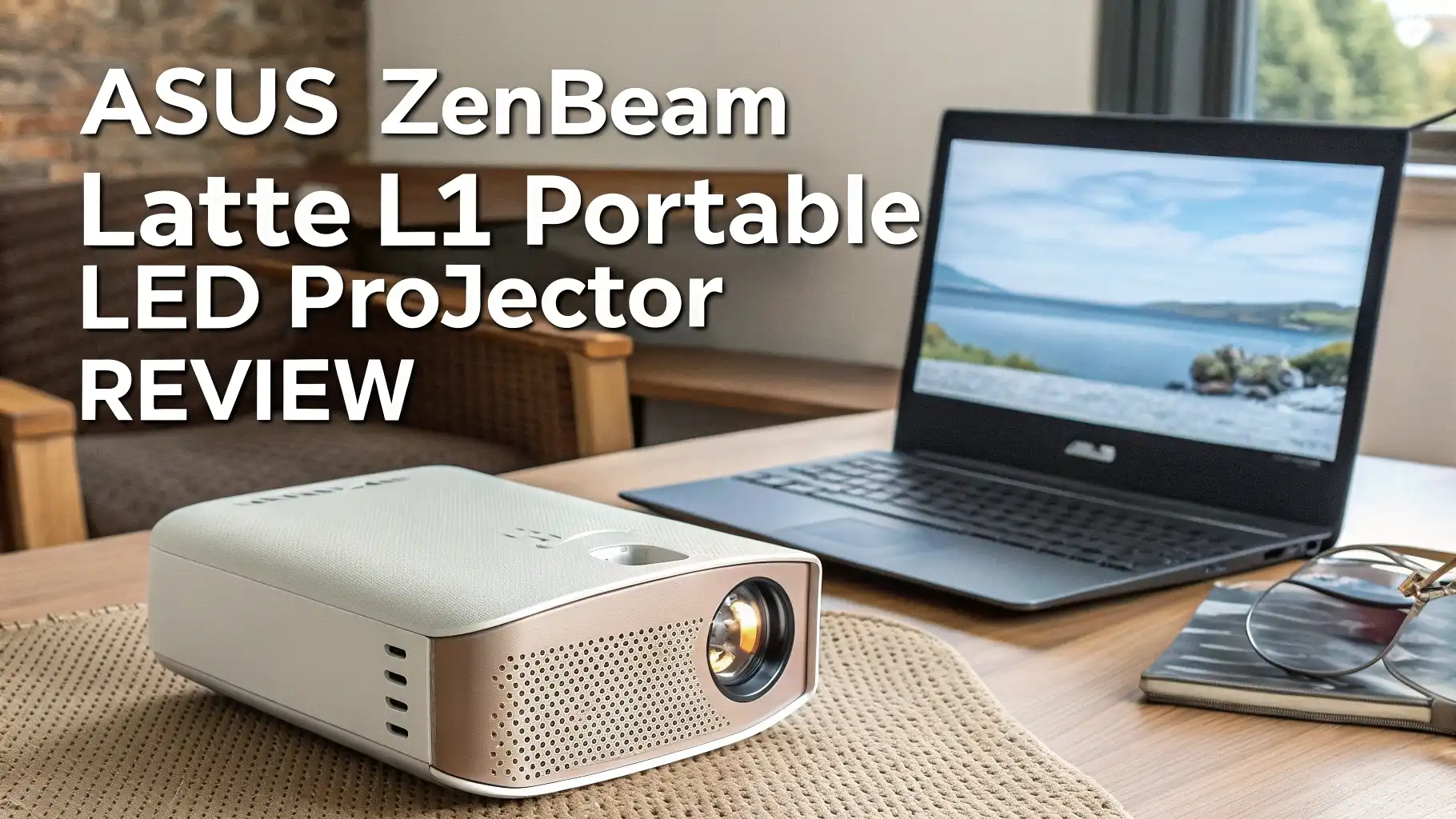
ASUS ZenBeam Latte L1 Portable LED Projector Review
The portable projector market has exploded with innovative options, and the ASUS ZenBeam Latte L1 stands out as a compelling choice for users seeking mobility without sacrificing performance.
This comprehensive review examines every aspect of this 300-lumen LED projector, from its sleek design to its practical applications.
Whether you’re a business professional needing presentation tools or a movie enthusiast wanting outdoor entertainment, this detailed analysis will help you make an informed decision about the ZenBeam Latte L1 and its alternatives.
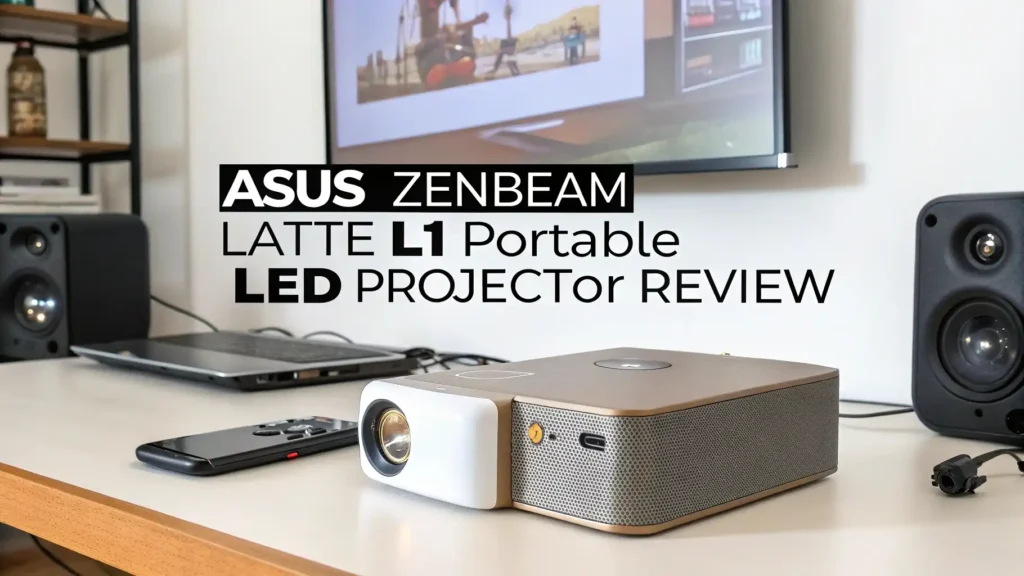
Key Takeaways –
- Compact Design Excellence: The ZenBeam Latte L1 weighs just 1.2 pounds and features a coffee cup-inspired design that makes it incredibly portable for travel and outdoor use
- Decent Brightness Performance: With 300 LED lumens output and 720p native resolution, it delivers adequate performance for darkened rooms and small to medium presentations
- Extended Battery Life: The built-in 6000mAh battery provides up to 3 hours of continuous playback in eco mode, perfect for movie nights without power sources
- Premium Audio Integration: Features Harman Kardon Bluetooth speakers that double as standalone audio devices, adding value beyond projection capabilities
- Versatile Connectivity Options: Supports wireless WiFi projection, HDMI input, USB connections, and smartphone mirroring for maximum device compatibility
- Price Positioning Considerations: At around $300-400, it competes with more feature-rich alternatives, making careful comparison essential before purchase

ASUS ZenBeam Latte L1 Design and Build Quality
The ZenBeam Latte L1 immediately impresses with its unique aesthetic approach. ASUS designed this projector to resemble a large coffee cup, complete with a fabric-textured exterior that feels premium to the touch. The device measures just 4.3 inches in diameter and 5.7 inches in height, making it genuinely pocketable for most users.
The build quality feels solid despite its lightweight construction. The fabric covering provides excellent grip and helps prevent slipping during positioning adjustments. The minimalist button layout includes power, source selection, and basic navigation controls that respond well to touch inputs.
Heat management deserves special mention. Unlike many portable projectors that become uncomfortably warm during extended use, the Latte L1 maintains reasonable operating temperatures thanks to its efficient LED light source and thoughtful ventilation design. The quiet cooling fan operates at barely audible levels, making it suitable for bedroom use without disturbing sleep.
Display Performance and Image Quality
The ZenBeam Latte L1 delivers 720p native resolution with support for 1080p input sources. While this might seem limiting in our 4K world, the reality is more nuanced. For projection sizes between 40 and 120 inches, 720p provides acceptable detail levels, especially when viewed from appropriate distances.
Brightness output at 300 LED lumens positions this projector in the lower-middle range of portable options. In completely darkened rooms, the image appears vibrant with good contrast ratios. However, ambient light quickly washes out the picture, limiting daytime usability even with curtains drawn.
Color reproduction impresses within the brightness limitations. The DLP technology produces accurate skin tones and reasonably saturated colors. The preset picture modes include Presentation, Standard, Theater, and Sports, each optimized for different content types. Theater mode provides the most cinematic experience with enhanced contrast, while Presentation mode maximizes brightness for business use.
Focus quality remains sharp across most of the projection area, though slight softness appears in corners at maximum screen sizes. The fixed focus lens eliminates adjustment complexity but limits optimization for specific distances.
Battery Life and Power Management
The integrated 6000mAh battery represents one of the Latte L1’s strongest features. ASUS claims up to 3 hours of video playback in eco mode, and real-world testing confirms this estimate under optimal conditions. Running at higher brightness levels reduces battery life to approximately 2 hours, which still provides sufficient runtime for most movie experiences.
Charging behavior proves convenient with the included USB-C power adapter. A full charge takes approximately 3 hours, and the device supports operation while plugged in without battery degradation concerns. The power management system automatically adjusts brightness and fan speed to extend battery life when unplugged.
Power consumption varies significantly based on usage patterns. Eco mode reduces power draw substantially while maintaining acceptable image quality for casual viewing. Normal and bright modes consume battery more rapidly but provide better visibility in less-than-ideal lighting conditions.
Top 3 Alternatives for ASUS ZenBeam Latte L1


Audio Quality and Harman Kardon Integration
The built-in Harman Kardon Bluetooth speakers elevate the Latte L1 beyond typical projector audio capabilities. These speakers produce surprisingly full sound for such a compact device, with clear midrange reproduction and adequate bass response for small to medium rooms.
Bluetooth connectivity allows the speakers to function independently of the projection system. This dual-purpose design adds value by eliminating the need for separate portable speakers during outdoor activities. The speakers maintain connection reliability up to approximately 30 feet from source devices.
Audio synchronization with projected content remains tight without noticeable lag. The speakers handle dialogue clearly, making them suitable for both movies and presentations. While audiophiles will want to connect external sound systems for premium experiences, the integrated audio satisfies most casual users completely.
Connectivity Options and Wireless Features
WiFi connectivity enables seamless smartphone and tablet mirroring through multiple protocols. iPhone users can utilize AirPlay functionality, while Android devices connect through Miracast or direct WiFi connections. Setup proves straightforward with clear on-screen instructions guiding users through pairing processes.
HDMI input provides direct connection to laptops, gaming consoles, and media players. The compact HDMI port requires careful cable management to avoid strain on the connection, but image quality through wired connections consistently outperforms wireless alternatives.
USB connectivity supports direct media playback from flash drives and external storage devices. The projector recognizes common video formats including MP4, AVI, and MKV files. Photo slideshow capabilities work well for sharing vacation memories or business presentations.
AptoideTV integration offers limited smart TV functionality, though the app selection feels sparse compared to mainstream platforms. The interface responds adequately to the included remote control, but navigation can feel sluggish during complex operations.
Projection Distance and Setup Flexibility
The ZenBeam Latte L1 excels in setup simplicity. Its short-throw design projects a 40-inch image from just 3.3 feet away, making it practical for small rooms and cramped spaces. Maximum projection distance of approximately 10 feet produces 120-inch images suitable for outdoor movie nights.
Keystone correction helps compensate for angled positioning, though the adjustment range feels limited compared to more expensive alternatives. Manual adjustment requires patience to achieve perfectly rectangular images, especially when projecting onto uneven surfaces.
Mounting options remain basic with the standard tripod thread on the bottom. The lightweight design makes wall mounting feasible with appropriate brackets, though the lack of built-in adjustment mechanisms limits installation flexibility.
Performance in Different Environments
Indoor performance shines in dedicated home theater spaces with controlled lighting. The Latte L1 produces engaging experiences for casual movie watching, video game sessions, and presentation duties. Rooms with white or light-colored walls work best for reflection-based setups.
Outdoor capabilities depend heavily on environmental conditions. Complete darkness enables enjoyable movie experiences, while even minimal ambient light significantly impacts visibility. Wind affects the lightweight design, requiring stable placement or sheltered locations for optimal performance.
Business presentation use works well in typical conference rooms with dimmed lighting. The 720p resolution handles text-heavy slides adequately, though fine details may appear less sharp than users expect from desktop monitors or larger displays.
Comparison with Competing Models
Against premium alternatives like the XGIMI MoGo 3 Pro, the Latte L1 offers similar portability at a lower price point but sacrifices brightness and smart features. The MoGo 3 Pro’s 450 ISO lumens and full Google TV integration provide more versatile functionality.
Budget comparison reveals the Latte L1’s premium positioning. Many sub-$200 portable projectors offer similar brightness levels, though build quality and audio capabilities typically fall short of ASUS standards.
Brand ecosystem considerations favor users already invested in ASUS products, as the Latte L1 integrates well with other company devices and software solutions.
Software Interface and User Experience
Menu navigation feels intuitive with logical organization of settings and options. The remote control provides adequate responsiveness, though smartphone apps offer more precise control for detailed adjustments.
Smart features include basic streaming capabilities through AptoideTV, though the limited app selection disappoints users expecting comprehensive smart TV functionality. The interface updates occasionally but lacks the frequent improvements seen in dedicated streaming platforms.
Firmware updates arrive periodically to address bugs and add minor features. The update process requires WiFi connectivity and completes automatically without user intervention in most cases.
Value Proposition and Target Audience
Price positioning at approximately $300-400 places the Latte L1 in a competitive segment with numerous alternatives. The premium build quality and Harman Kardon audio justify some price premium over budget options, but value-conscious buyers might find better specifications elsewhere.
Target users include business professionals needing reliable presentation tools, casual movie enthusiasts wanting occasional large-screen entertainment, and travelers seeking compact multimedia solutions. The device serves these audiences well within its operational limitations.
Long-term value depends on usage patterns and expectations. Users prioritizing portability and audio quality over maximum brightness will find lasting satisfaction, while those needing daytime projection capabilities should consider brighter alternatives.
Pros and Cons Analysis
Advantages include exceptional portability, premium build quality, integrated Harman Kardon speakers, decent battery life, and simple setup procedures. The unique design aesthetic appeals to users wanting projectors that don’t look obviously technical.
Limitations encompass modest brightness output, 720p resolution ceiling, limited smart TV features, sensitivity to ambient light, and premium pricing relative to specification comparisons. These factors may eliminate the Latte L1 from consideration for some use cases.
Final Verdict and Recommendations
The ASUS ZenBeam Latte L1 succeeds as a lifestyle-focused portable projector that prioritizes design, portability, and audio quality over maximum specifications. Users seeking a travel-friendly device for occasional entertainment will appreciate its thoughtful engineering and premium feel.
Best suited for casual movie watching in darkened rooms, business presentations in controlled environments, and outdoor entertainment where power access might be limited. The integrated speakers add genuine value for users wanting simplified audio solutions.
Consider alternatives if maximum brightness is essential, 4K resolution matters for your content, extensive smart TV features are required, or budget constraints favor specification-focused choices over premium design elements.
Frequently Asked Questions
Can the ASUS ZenBeam Latte L1 replace a traditional TV?
The Latte L1 works well as a supplementary display but cannot fully replace traditional TVs due to its 300-lumen brightness limitation. It excels for nighttime viewing in darkened rooms but struggles with daytime visibility even with curtains closed.
How long does the battery actually last during real use?
Real-world battery life varies between 2-3 hours depending on brightness settings and content type. Eco mode extends runtime closest to the 3-hour claim, while normal and bright modes reduce battery life to approximately 2 hours of continuous use.
What devices can connect wirelessly to the projector?
The Latte L1 supports wireless connections from iPhones and iPads through AirPlay, Android devices via Miracast, and Windows computers through WiFi Direct connections. Setup requires both devices to connect to the same WiFi network or use direct pairing modes.
Is the projector suitable for gaming with consoles?
Gaming performance depends on the specific console and game type. The HDMI input provides adequate response times for casual gaming, though competitive gamers might notice slight input lag compared to dedicated gaming displays. Sports and racing games work better than fast-paced shooters.
How does the image quality compare to larger home theater projectors?
The 720p resolution and 300-lumen output cannot match dedicated home theater projectors in terms of detail and brightness. However, for portable use cases and smaller projection sizes, the image quality proves acceptable for casual viewing and basic presentation needs.
Can I use the speakers without turning on the projector?
Yes, the Harman Kardon speakers function independently as Bluetooth speakers even when the projection system is powered off. This dual-purpose design adds value by eliminating the need for separate portable audio devices during travel or outdoor activities.